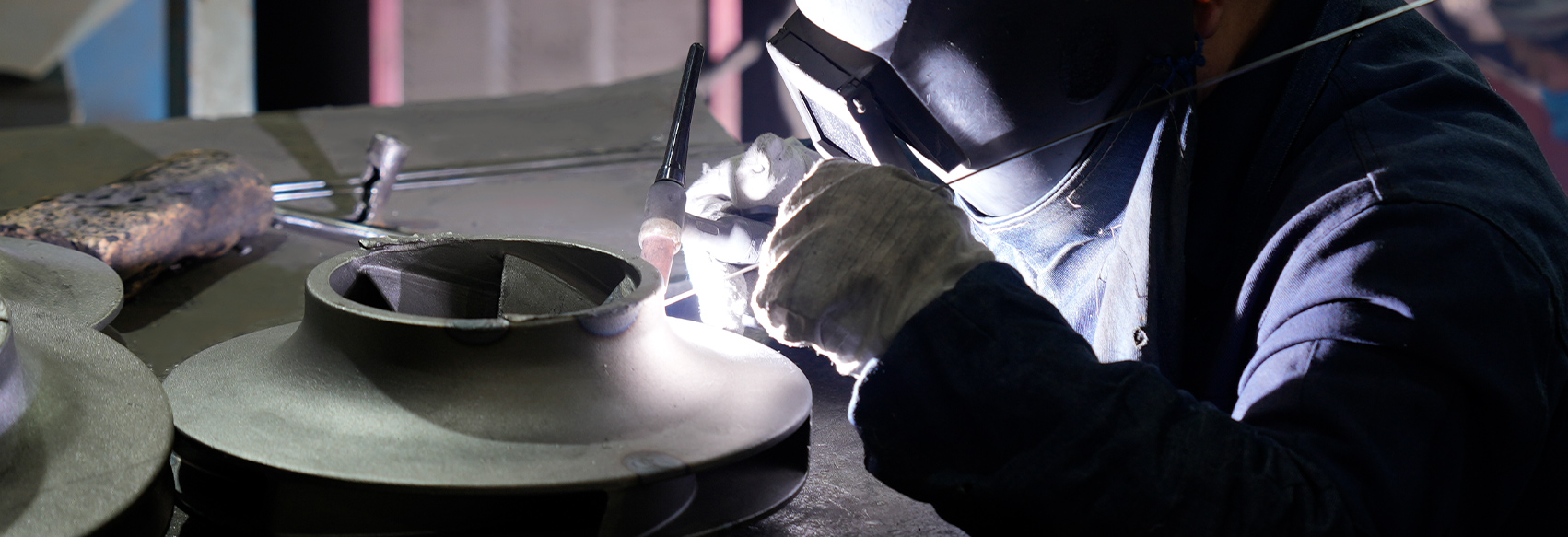
Choosing corrosion-resistant castings correctly comes down to matching alloy chemistry and casting process to the specific corrosive environment a part will face — saltwater, acidic process fluids, or atmospheric humidity each demand different metallurgical solutions. A duplex stainless steel casting suited for seawater valve bodies will be needlessly expensive for a mildly humid indoor application, while a standard carbon steel casting will fail within a year in a marine or chemical processing environment. Getting this match right is what separates castings that last 20+ years from ones needing replacement every few seasons.
Alloy Families Compared for Corrosion Performance
The base alloy is the single biggest determinant of how well corrosion-resistant castings hold up in aggressive environments, and different families offer distinctly different protection mechanisms and cost profiles.
| Alloy Family |
Corrosion Mechanism |
Typical Application |
| Austenitic Stainless Steel (304/316) |
Passive chromium oxide layer |
Food processing, mild chemical exposure |
| Duplex Stainless Steel |
Dual-phase structure resists pitting and stress cracking |
Seawater valves, offshore fittings |
| Nickel-Aluminum Bronze |
Self-healing oxide film in marine water |
Ship propellers, marine pump housings |
| Nickel-Based Alloys (e.g., Hastelloy-type) |
High resistance to acids and chlorides |
Chemical processing, flue gas desulfurization |
Austenitic stainless steel castings cover the majority of general corrosion-resistant applications at a moderate price point, but they remain vulnerable to chloride-induced pitting in high-salinity environments. Duplex stainless steel castings address this weakness directly, offering roughly double the yield strength of standard austenitic grades along with significantly better resistance to stress corrosion cracking, making them the preferred choice for offshore and seawater-handling components despite a 15–25% higher material cost. Nickel-aluminum bronze remains a mainstay for marine propulsion components specifically because its oxide film regenerates when scratched or abraded, a property standard stainless steel doesn't replicate as effectively in continuous seawater immersion.
Casting Process and Its Effect on Corrosion Resistance
The casting method used doesn't just affect dimensional accuracy and surface finish — it directly influences the internal grain structure and porosity of the final part, both of which affect how corrosion progresses over time.
- Sand casting: Cost-effective for larger parts but tends to produce coarser grain structure and higher porosity, which can create microscopic pathways for corrosive media to penetrate below the surface.
- Investment casting: Produces finer grain structure and tighter dimensional tolerances, reducing surface irregularities where corrosion typically initiates first.
- Centrifugal casting: Forces molten metal outward under rotational force, producing denser material with fewer internal voids, which is particularly valuable for cylindrical corrosion-resistant castings like pipes and valve bodies.
Porosity is a critical but often overlooked factor — a casting with internal porosity above roughly 1–2% by volume can show significantly accelerated corrosion rates compared to a fully dense casting of the identical alloy, since trapped voids allow corrosive fluids to attack the metal from multiple internal surfaces rather than a single exposed face. This is why investment and centrifugal casting methods often justify their higher cost for critical corrosion-resistant components, even when sand casting would be cheaper for the same part geometry.
Surface Treatments and Coatings That Extend Service Life
Even a well-chosen alloy benefits from supplementary surface treatment in particularly aggressive environments, and the right coating can extend service life considerably beyond what the base alloy alone would achieve.
| Treatment |
Added Protection |
| Passivation |
Removes free iron from stainless surfaces, strengthening the native oxide layer |
| Epoxy or fusion-bonded coating |
Physical barrier against moisture and chemical contact |
| Cathodic protection (sacrificial anodes) |
Diverts corrosion to a sacrificial metal rather than the casting itself |
Passivation is a near-mandatory finishing step for stainless steel corrosion-resistant castings, since manufacturing processes can embed free iron particles on the surface that would otherwise create localized rust spots even on an otherwise high-grade alloy. For submerged marine components, adding sacrificial zinc or aluminum anodes alongside a corrosion-resistant casting can extend service intervals substantially, since the anode corrodes preferentially and protects the primary casting from galvanic attack.
Cost Comparison: Premium Alloys Versus Coated Standard Alloys
A recurring decision when specifying corrosion-resistant castings is whether to pay for a premium alloy upfront or use a standard alloy with an added protective coating. Both approaches can work, but they carry different risk profiles.
A duplex stainless steel casting might cost 20–30% more than an equivalent 316 stainless part, but it requires no additional coating and maintains its resistance even if the surface is scratched during installation or operation. A coated standard alloy casting costs less initially but carries ongoing risk: any coating breach — from abrasion, impact, or coating degradation over time — exposes the base metal directly to the corrosive environment, often triggering localized corrosion faster than uniform attack would occur on an uncoated but inherently resistant alloy. For components that are difficult or expensive to access for recoating, such as buried piping or submerged marine fittings, the higher upfront cost of a premium alloy casting frequently proves cheaper over a 15–20 year service life than repeated recoating cycles on a standard alloy part.
Matching Casting Selection to Specific Industrial Environments
Different industries impose distinct corrosive challenges, and matching corrosion-resistant castings to the specific chemistry and mechanical stress of an application matters more than defaulting to whichever alloy has the broadest general reputation.
- Marine and offshore: Chloride exposure and mechanical stress from wave loading favor duplex stainless steel or nickel-aluminum bronze over standard austenitic grades.
- Chemical processing: Acidic or highly reactive process fluids often require nickel-based alloys capable of resisting aggressive chemical attack that would rapidly degrade standard stainless steel.
- Wastewater and municipal infrastructure: Moderate corrosion risk combined with budget sensitivity typically favors ductile iron castings with protective coatings rather than premium stainless alternatives.
- Food and pharmaceutical processing: Hygiene requirements combined with mild corrosion exposure make 316 stainless steel castings the standard choice, balancing cleanability with adequate resistance.
Quality Verification Methods for Corrosion Performance
Specifying the right alloy and process is only half the equation — verifying that a delivered casting actually meets its corrosion-resistance specification requires targeted testing rather than visual inspection alone.
Salt spray testing, typically run according to standardized exposure durations of 96 to 500+ hours depending on application severity, provides a comparative measure of how quickly surface corrosion appears under accelerated conditions. Radiographic or ultrasonic testing detects internal porosity and voids that visual inspection cannot catch, which is particularly important given how strongly internal porosity correlates with premature corrosion failure. For critical applications, third-party metallurgical analysis confirming actual alloy composition against the specified grade protects against the risk of substituted or off-spec material entering a supply chain, a risk that becomes more significant as sourcing shifts across multiple suppliers and regions.




 English
 Español
 عربى
عربى