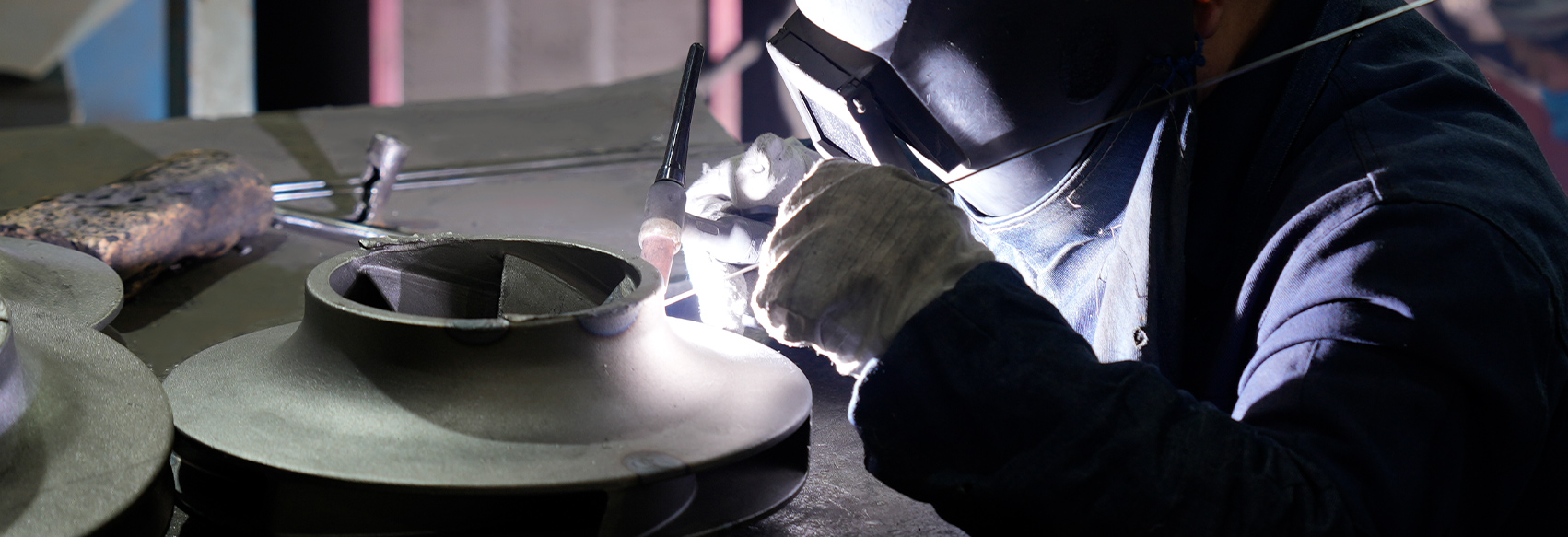
Stainless steel cast pipe represents a vital engineering solution for moving high-temperature, high-pressure, and highly corrosive fluids across critical industrial systems. By forming the pipe profile directly from molten metal using specialized centrifugal or static molding processes, casting circumvents the structural directional limitations of welded or cold-worked piping. This production methodology achieves absolute isotropic mechanical properties, ensuring uniform pressure containment, exceptional resistance to thermal fatigue, and superior structural integrity in extreme environments where failure is not an option.
The Metallurgy of Casting: Isotropic Strength vs. Directional Grain Structures
To grasp the engineering value of a stainless steel cast pipe, one must analyze the microscopic grain matrix formed during solidification. Standard wrought pipes are produced by rolling a flat steel plate into a cylindrical shape and welding the seam, or by mechanically piercing a solid billet to create a seamless pipe. While these mechanical manipulation processes are efficient, they impart a distinct directional grain flow along the axis of deformation. This anisotropic structural layout means the material behaves differently when subjected to forces parallel to the grain versus forces perpendicular to it.
Casting fundamentally changes this paradigm. When molten stainless steel is poured into a rotating die during centrifugal casting, it solidifies under intense directional pressure from the outside wall inward. This creates an isotropic crystalline structure, meaning the mechanical attributes—such as tensile strength, yield strength, and elongation capabilities—are completely uniform in all directions (radial, axial, and circumferential). For high-pressure processing lines, uniform strength prevents localized bulging or directional rupturing when internal pressures spike unexpectedly.
Furthermore, the casting process allows for precise grain customization through controlled cooling curves. Industrial foundries can introduce specific alloying elements like molybdenum, nickel, and chromium in precise volumetric ratios without worrying about the cracking or work-hardening limitations that restrict wrought manufacturing. This provides chemical processing plants with pipes tailored to withstand highly aggressive acids, brines, and fluctuating chemical compositions without premature degradation.
Comparative Analysis: Centrifugal Casting, Static Casting, and Wrought Seamless Pipes
Engineering designers must carefully evaluate the production methods used to create industrial piping networks. Each method impacts wall thickness consistency, structural density, and long-term cost-efficiency. The three primary methods utilized for severe-service environments are centrifugal casting, static casting, and wrought seamless manipulation.
Centrifugal Casting: This process involves pouring liquid stainless steel into a rapidly spinning mold. The centrifugal force (frequently exceeding 60G to 100G) forces the denser, pure metal outward against the mold walls, while lighter impurities, oxides, and gases migrate to the inner hollow core, where they are mechanically machined away. This yields a dense, void-free pipe wall with exceptional dimensional accuracy and uniform wall thickness across long runs.
Static Casting: Used primarily for complex geometries, variable diameters, or integrated flange connections, static casting pours molten metal into a stationary sand or ceramic mold. While it allows for unmatched design flexibility, it relies solely on gravity for compaction, meaning it requires careful riser placement and precise thermal management to prevent internal shrinkage cavities or gas porosity.
Wrought Seamless: Created via hot-piercing and continuous extrusion, wrought seamless pipe boasts an excellent surface finish and fine grain structure. However, it is restricted to standard outer diameters and struggles with ultra-thick walls. Producing custom heavy-wall piping via extrusion requires massive capital tooling investments, making it economically unfeasible for specialized, low-volume industrial configurations.
| Property / Feature |
Centrifugally Cast Pipe |
Statically Cast Pipe |
Wrought Seamless Pipe |
| Structural Integrity |
Ultra-dense; zero porosity due to centrifugal compaction |
Variable density; requires radiographic testing for voids |
High density; prone to directional directional tearing |
| Wall Thickness Versatility |
Virtually unlimited; easily achieves heavy-wall profiles |
Highly flexible; accommodates stepped wall variations |
Limited by extrusion press capacity and die restrictions |
| Geometric Customization |
Limited to straight, uniform cylindrical profiles |
Maximum; can incorporate bends, elbows, and flanges |
Standard straight runs only; requires separate fittings |
| Mechanical Properties |
Completely Isotropic (uniform in all dimensions) |
Isotropic (may exhibit minor grain boundary variations) |
Anisotropic (high longitudinal, lower transverse strength) |
| Tooling Lead Time / Cost |
Low to moderate; reusable cylindrical dies |
Moderate; requires dedicated patterns for molds |
Extremely high setup costs for non-standard sizing |
Alloying Strategies for Heavy Industrial Service Conditions
The primary advantage of deploying stainless steel cast pipe solutions is the ease with which metallurgical formulations can be tailored to target specific degradative mechanisms. Unlike wrought material mills that demand multi-ton production runs to justify custom chemistry, casting furnaces operate in smaller batches. This agility allows mechanical engineers to optimize the chemical composition to combat localized corrosion, high-temperature oxidation, or creep deformation.
Several distinct grades dominate the high-performance casting sector, each utilizing precise metallurgical ratios to handle distinct thermodynamic challenges:
- ■ Austenitic Cast Alloys (e.g., CF8M / CF3M): These cast equivalents of 316/316L stainless steel feature 17% to 21% chromium and 9% to 13% nickel, enhanced with 2% to 3% molybdenum. The inclusion of molybdenum dramatically lowers the material's vulnerability to pitting and crevice corrosion in high-chloride aquatic environments, making them indispensable for offshore desalination facilities.
- ■ Duplex and Super Duplex Cast Alloys (e.g., CE3MN): Sporting a balanced, dual-phase microstructure of roughly 50% ferrite and 50% austenite, duplex cast pipes deliver nearly double the yield strength of standard austenitic pipes. They demonstrate extreme resistance to stress corrosion cracking (SCC) in hydrogen sulfide-rich environments commonly found in deep-sea oil extraction.
- ■ Heat-Resistant Cast Alloys (e.g., HK40 / HP40): Formulated with high carbon content (0.35% to 0.45%) along with elevated nickel (20% to 35%) and chromium (24% to 27%), these specialized cast pipes are engineered to operate continuously at temperatures exceeding 1600°F (870°C). They resist micro-structural creep and internal carburization inside petrochemical cracking furnaces.
Economic Realities: Procurement Costs vs. Lifecycle Return on Investment
When analyzing the fiscal aspects of industrial piping procurement, comparing assets solely on upfront capital expenditure (CAPEX) presents an incomplete financial picture. Heavy-wall stainless steel cast pipe carries a distinct initial price premium over standard longitudinally welded piping. However, when evaluating the total cost of ownership (TCO) across a typical 25-to-40-year facility operational horizon, cast assets frequently yield substantial long-term savings.
Consider a practical engineering scenario within a high-pressure municipal wastewater processing facility managing corrosive sludge. Longitudinally welded pipes feature a subtle, microscopic metallurgical variance along the weld seam. Over a five-year period of continuous cycling, the combination of pulsing hydraulic pressures and acidic chemistry often concentrates stress at this seam, leading to localized stress corrosion cracking. Repairing a ruptured pipe section requires an emergency shutdown, cleanout protocols, specialized field welding technicians, and comprehensive non-destructive testing—costing thousands of dollars per hour in operational losses.
Financial Case Study Matrix: 10-Year Operational Window
Below is an economic projection comparing a 12-inch diameter centrifugally cast stainless steel pipe run against a standard welded alternative in an aggressive industrial fluid application:
- Initial Procurement & Rigging: The welded piping system carries a base cost of $45,000, whereas the centrifugally cast piping system commands $62,000 due to specialized casting setups and mandatory internal bore machining.
- Non-Destructive Testing (NDT) Cadence: Welded lines require frequent ultrasonic inspection across the weld seams every 24 months to scan for stress propagation, totaling roughly $14,000 over ten years. Cast pipe, featuring an isotropic matrix with no seam, requires basic visual and dye-penetrant checks costing less than $3,500 over the same span.
- Unplanned Downtime Events: Historical plant tracking reveals an average of 1.5 seam-related pinhole failures per decade for welded lines under cyclic pressure. Each failure forces a 14-hour partial facility outage, calculated at an asset loss of $32,000. Cast infrastructure exhibits a historical failure rate near zero under matching conditions.
- Net Financial Position: Despite the $17,000 higher initial CAPEX, the stainless steel cast pipe saves more than $42,500 in maintenance, compliance testing, and downtime mitigation, delivering full capital amortization within the first four years of service.
Quality Verification Protocols and Testing Standards
Because stainless steel cast pipe products are routinely placed into severe service operations where containment failure can result in environmental hazards or personnel risk, manufacturing compliance must adhere to strict international engineering standards. Organizations like the American Society for Testing and Materials (ASTM) and the American Society of Mechanical Engineers (ASME) maintain rigorous tracking, testing, and validation mandates.
The core standard governing centrifugally cast austenitic stainless steel pipe for high-temperature and corrosive service is ASTM A451. This standard outlines strict limits regarding chemical composition tolerances, heat treatment requirements, and mechanical testing profiles. All castings must undergo full solution annealing—heating the cast pipe to temperatures exceeding 1900°F (1040°C) followed by a rapid water quench—to re-dissolve any chromium carbides that precipitated during initial solidification, thereby restoring maximum corrosion resistance to the crystalline matrix.
In addition to chemical verification, foundries must execute multi-tier non-destructive testing (NDT) to ensure the internal walls are free from subsurface anomalies. Hydrostatic pressure testing is universally applied, forcing water into the sealed pipe at 1.5 times the maximum rated design pressure to verify absolute containment. For maximum safety environments, such as nuclear power cooling loops or high-pressure gas processing, volumetric inspections like radiography (X-ray testing) or advanced phased-array ultrasonic testing (PAUT) are deployed to map the internal structure, guaranteeing the complete absence of micro-porosity, tears, or density variations.
References
• ASTM International. ASTM A451/A451M - Standard Specification for Centrifugally Cast Austenitic Steel Pipe for High-Temperature Service. West Conshohocken, PA.
• American Society of Mechanical Engineers (ASME). ASME B31.3 - Process Piping Code for Severe Industrial Fluid Applications. New York, NY.
• Journal of Materials Engineering and Performance. Microstructural Evolution and Mechanical Isotropy of Centrifugally Cast Stainless Steel Alloys.




 English
 Español
 عربى
عربى