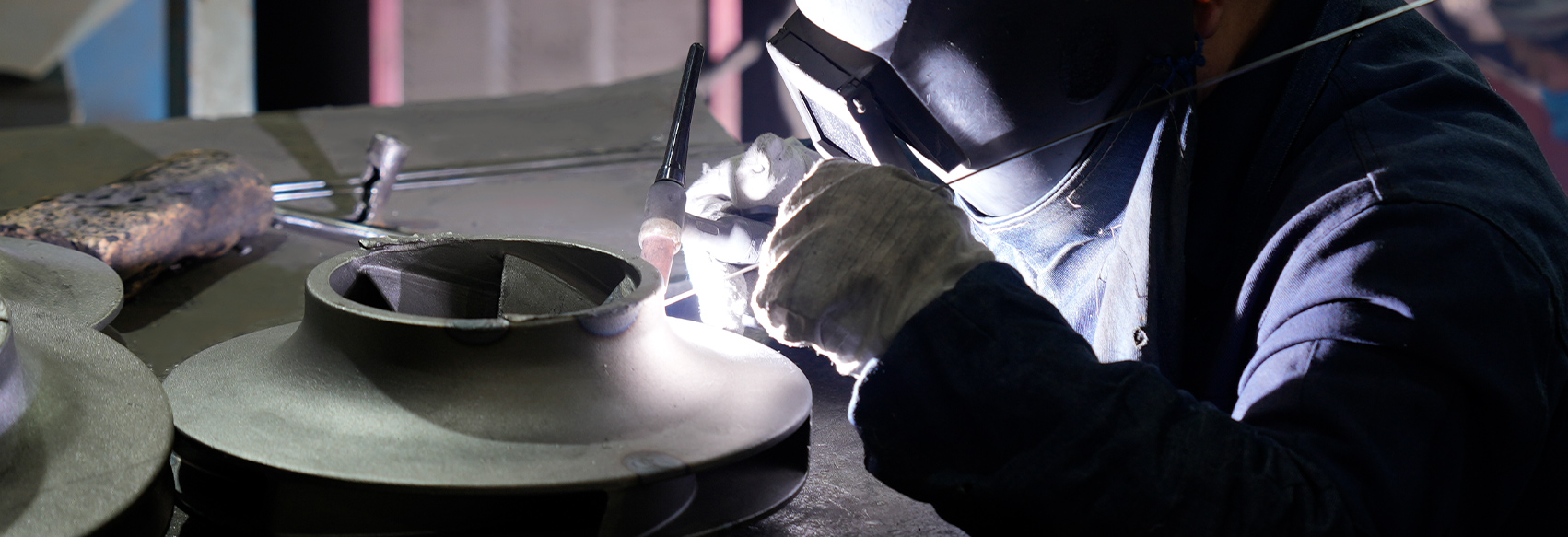
Quality Assurance Requirements for a Centrifugal Case Pipe
The question of whether a centrifugal case pipe undergoes internal defect detection is closely related to quality control standards in industrial manufacturing. A centrifugal case pipe is typically produced through centrifugal casting, a process in which molten metal is poured into a rotating mold to form cylindrical components with high density and uniform wall thickness. While centrifugal casting promotes structural consistency by forcing impurities toward the inner diameter, it does not eliminate the need for inspection. Internal defect detection remains an essential part of ensuring reliability, especially when the pipe is used in demanding environments such as oil and gas, petrochemical transport, power generation, or heavy machinery systems.
Because these pipes are often subjected to pressure, thermal stress, and mechanical load, hidden discontinuities such as shrinkage cavities, porosity, slag inclusions, or microcracks may compromise performance. For this reason, manufacturers commonly implement internal inspection procedures to verify that each centrifugal case pipe meets dimensional and metallurgical requirements before delivery.
Characteristics of Centrifugal Casting and Defect Formation
Centrifugal casting involves rotating the mold at controlled speeds while molten material solidifies against the inner surface of the mold wall. The centrifugal force pushes heavier molten metal outward, while lighter impurities migrate toward the bore. This natural segregation improves density near the outer wall, which is often the region bearing the highest stress during service. However, variations in cooling rate, rotational speed, or alloy composition may still result in localized imperfections.
Common internal irregularities associated with centrifugal casting include gas porosity caused by entrapped gases, shrinkage voids formed during solidification, and non-metallic inclusions introduced during pouring. Although the process itself enhances structural homogeneity compared to some static casting methods, systematic inspection ensures that these potential flaws are identified and addressed before machining or installation.
Importance of Internal Defect Detection
Internal defect detection plays a significant role in maintaining structural reliability. A centrifugal case pipe may operate under internal pressure, rotational load, or thermal cycling. Undetected flaws could propagate over time, potentially leading to leakage or mechanical failure. Early detection allows manufacturers to reject or repair non-conforming components before they enter service.
Inspection is particularly critical when pipes are intended for high-pressure applications. Even minor internal voids can concentrate stress, especially near welded joints or machined threads. By conducting thorough examinations, producers align manufacturing output with engineering design expectations and applicable industry standards.
Non-Destructive Testing Methods Applied to Centrifugal Case Pipe
Several non-destructive testing methods are commonly used to evaluate internal quality without damaging the component. These methods provide insight into internal conditions while preserving the structural integrity of the centrifugal case pipe.
The following table outlines typical inspection techniques used after centrifugal casting:
| Inspection Method |
Detection Capability |
Applicable Defect Types |
Typical Application Stage |
| Ultrasonic Testing |
Subsurface Flaw Identification |
Porosity, Cracks, Voids |
After Rough Machining |
| Radiographic Testing |
Internal Imaging |
Inclusions, Shrinkage Cavities |
Before Final Machining |
| Magnetic Particle Testing |
Surface and Near-Surface Flaws |
Cracks |
After Heat Treatment |
| Visual Bore Inspection |
Direct Internal Observation |
Surface Irregularities |
Before Delivery |
Each method serves a specific purpose depending on the expected defect type and required inspection depth. Ultrasonic testing is widely used because it can detect internal discontinuities through high-frequency sound waves. Radiographic testing provides image-based evaluation, allowing inspectors to visualize density variations inside the material.
Ultrasonic Testing Procedures
Ultrasonic testing is one of the most common approaches for internal defect detection in a centrifugal case pipe. During this process, a transducer emits sound waves that travel through the pipe wall. Reflected signals from discontinuities are analyzed to determine the presence and approximate size of flaws. Because centrifugal casting produces cylindrical geometry, ultrasonic probes can be calibrated to scan circumferentially and longitudinally.
The effectiveness of ultrasonic inspection depends on proper surface preparation and calibration standards. Technicians interpret signal amplitude and time-of-flight data to assess defect location. This technique allows detection of subsurface flaws that are not visible to the naked eye and supports quality verification before the pipe is subjected to machining or assembly.
Radiographic Evaluation and Imaging Analysis
Radiographic testing involves exposing the centrifugal case pipe to controlled X-ray or gamma radiation. Differences in material density affect radiation absorption, producing an image that reveals internal features. Areas with voids or inclusions appear as contrasts on the radiographic film or digital display.
This method is particularly effective for identifying shrinkage cavities formed during centrifugal casting solidification. Radiographic evaluation provides permanent documentation, which can be stored for traceability and quality audits. Although radiographic inspection requires safety precautions and specialized equipment, it offers detailed visualization of internal structures.
Machining and Bore Examination
After centrifugal casting, the inner diameter of the pipe is typically machined to remove the layer where impurities may accumulate. This machining process not only achieves dimensional accuracy but also exposes potential defects that migrated toward the bore during rotation. Visual inspection and dimensional measurement are often performed at this stage.
Removing the inner layer can eliminate minor inclusions, but deeper discontinuities must still be assessed through non-destructive testing. The machining stage therefore complements formal inspection methods by providing direct access to critical internal surfaces.
Heat Treatment and Its Impact on Inspection
Heat treatment is frequently applied to a centrifugal case pipe to adjust mechanical properties such as hardness and tensile strength. Thermal cycles may also influence the visibility of certain defects. For example, quenching and tempering processes can reveal crack propagation that was previously undetected. Inspection is often repeated after heat treatment to confirm structural stability.
Combining heat treatment with inspection ensures that changes in microstructure do not introduce new flaws. Magnetic particle testing may be applied to identify surface cracks that become apparent after thermal stress.
Standards and Certification Requirements
Internal defect detection procedures are often guided by international or industry-specific standards. These standards define acceptable defect sizes, testing frequency, and documentation requirements. When a centrifugal case pipe is intended for critical applications, inspection records become part of quality assurance documentation submitted to clients or regulatory bodies.
Traceability systems link each pipe to its casting batch, material composition, and inspection results. This structured documentation enhances accountability throughout the production chain and supports compliance with contractual obligations.
Process Control and Preventive Measures
While internal inspection is essential, preventing defects at the source remains equally important. Careful control of pouring temperature, rotational speed, and cooling rate during centrifugal casting reduces the likelihood of internal discontinuities. Monitoring alloy composition and deoxidation practices helps limit inclusion formation.
Process monitoring systems record parameters for each production cycle. If anomalies are detected, adjustments can be implemented before subsequent casts are produced. By combining preventive control with systematic internal defect detection, manufacturers maintain consistency in centrifugal case pipe production.
Balancing Inspection Efficiency and Production Flow
Internal defect detection must be integrated into production schedules without causing unnecessary delays. Automated ultrasonic scanning systems allow rapid evaluation of multiple pipes in sequence. Digital radiography accelerates image analysis compared to traditional film processing. Efficient coordination between casting, machining, heat treatment, and inspection ensures that quality verification does not disrupt workflow.
In high-volume manufacturing environments, sampling plans may be adopted in accordance with client requirements. However, for high-risk applications, full inspection of each centrifugal case pipe may be performed to ensure structural reliability.
Long-Term Performance and Reliability Considerations
Internal defect detection contributes directly to long-term service performance. A pipe free from significant internal flaws is more likely to withstand cyclic loading, pressure fluctuations, and environmental stress. Continuous improvement in inspection technology supports early identification of potential weaknesses, reducing the likelihood of in-service failures.
By combining centrifugal casting process optimization with comprehensive non-destructive testing, manufacturers create a structured quality control framework. This approach ensures that each centrifugal case pipe delivered to the market undergoes systematic evaluation for internal integrity and compliance with specified performance requirements.




 English
 Español
 عربى
عربى