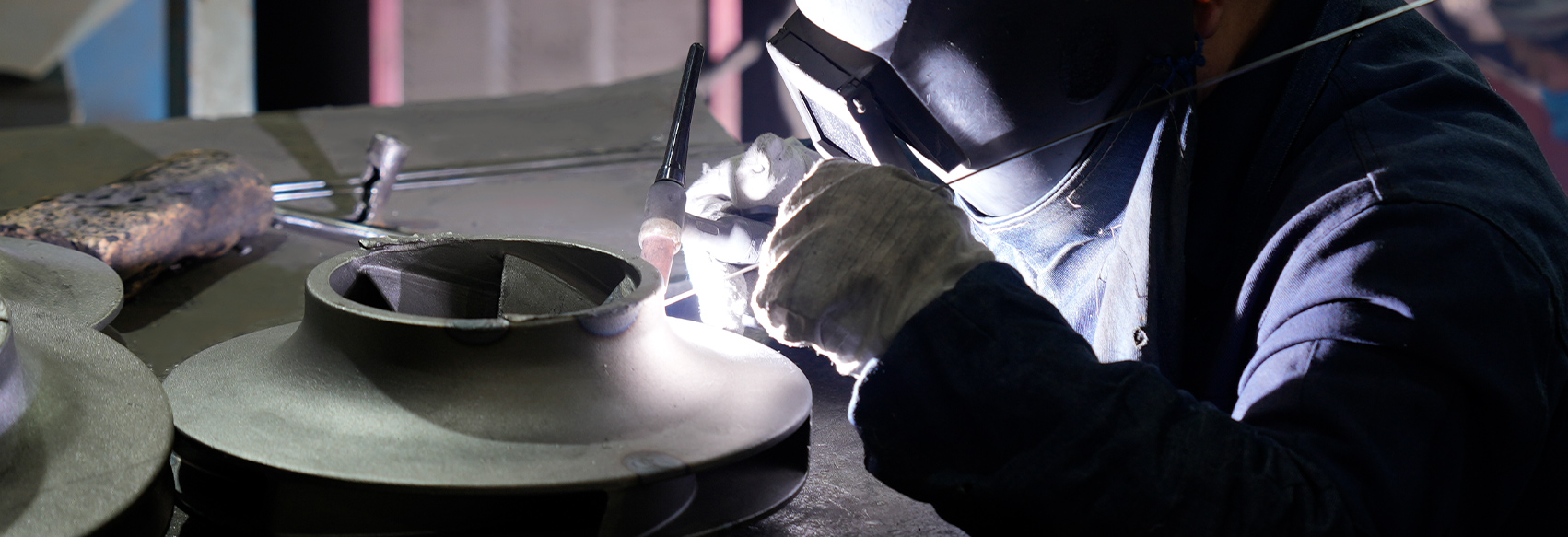
If you walk into any heat treatment shop or furnace line, you will hear the same complaints sooner or later. Parts deform. Fixtures crack. Welds fail earlier than expected. And most of the time, the problem is not the furnace. It is what goes inside it.
This is exactly why heat-resistant steel castings, heat treatment fixtures, and furnace welding fixtures are getting more attention from manufacturers who are tired of unexpected downtime.
What Are Heat-Resistant Steel Castings and High-Temperature Fixtures?
At a basic level, heat-resistant steel castings are components made to survive repeated exposure to high temperatures without losing strength or shape.
Heat treatment fixtures and furnace welding fixtures are the tools that hold, position, and support parts during heating, soaking, cooling, and sometimes welding inside industrial furnaces.
They are not consumables in theory, but in practice, poor design or material choice can turn them into exactly that.
Why These Products Are Usually Grouped Together
These three products often work as a system. The casting provides the structure, the fixture defines positioning, and the welding fixture keeps everything stable during joining or repair.
If one part fails, the whole process suffers.
Why Is This So Important in Modern Manufacturing?
Heat treatment cycles are getting more demanding. Higher temperatures, longer cycles, and tighter tolerances are becoming common.
Manufacturers are also running furnaces more frequently to meet delivery schedules. That leaves very little room for fixtures that warp, crack, or oxidize too fast.
When a fixture fails, it does not just cost money to replace it. It can scrap an entire batch of parts.
That is why many manufacturers now see heat-resistant castings and fixtures as process-critical equipment rather than simple tooling.
When Are These Products Typically Used?
You will find heat-resistant steel castings and fixtures wherever high temperatures are unavoidable.
Heat Treatment Furnaces
Carburizing, nitriding, annealing, quenching, and tempering all rely on fixtures that can hold shape under thermal stress.
Industrial Welding Operations
Furnace welding fixtures must maintain alignment during heating and cooling cycles, especially for large or complex assemblies.
Continuous Production Lines
In high-volume operations, fixtures may go through hundreds or thousands of cycles. Fatigue resistance matters as much as heat resistance.
Heavy Industry and Energy Equipment
Castings and fixtures are commonly used in aerospace, automotive, metallurgy, and energy sectors.
How Do Heat-Resistant Castings and Fixtures Actually Work?
The key is not just surviving heat, but surviving repeated heat.
Material Selection
Alloy composition is critical. Chromium, nickel, and other elements help resist oxidation, scaling, and creep at high temperatures.
Structural Design
Good fixtures are designed to allow thermal expansion. Rigid designs often fail faster than flexible ones.
Welding and Joint Integrity
For furnace welding fixtures, weld quality must match the base material. Poor welds become weak points under thermal cycling.
Surface Protection
Some castings use surface treatments or coatings to reduce oxidation and extend service life.
Common Problems Manufacturers Run Into
Most issues do not appear on day one. They build up over time.
Warping and Deformation
Repeated heating and cooling can slowly change fixture geometry, affecting part accuracy.
Cracking at Stress Points
Sharp corners and poor weld transitions often crack first.
Excessive Oxidation
Low-grade materials scale quickly, leading to material loss and contamination.
Short Service Life
Fixtures that look fine externally may fail internally due to creep or fatigue.
The Trade-Offs Manufacturers Need to Consider
There is no perfect solution that fits every furnace.
Where High-Quality Heat-Resistant Fixtures Excel
- - Longer service life
- - More stable part positioning
- - Reduced scrap rate
- - Fewer unplanned shutdowns
Where the Challenges Appear
- - Higher initial cost
- - Longer lead time for custom designs
- - Heavier weight in some alloy systems
Many manufacturers find that upfront investment pays off quickly through reduced downtime.
Typical Materials and Their Characteristics
| Material Type |
Main Strength |
Common Limitation |
| High Chromium Steel |
Good oxidation resistance |
Brittle at lower temperatures |
| High Nickel Alloy |
Excellent creep resistance |
Higher cost |
| Cast Heat-Resistant Steel |
Complex shapes possible |
Weight |
| Fabricated Heat-Resistant Steel |
Flexible design |
Weld quality dependent |
What Should Buyers Pay Attention To Before Ordering?
Many problems can be avoided by asking the right questions early.
Actual Operating Temperature
Do not rely on furnace setpoints alone. Local hot spots matter.
Cycle Frequency
A fixture used once a week has different needs than one used every hour.
Load Weight and Distribution
Uneven loads increase stress and deformation risk.
Welding Process Compatibility
For furnace welding fixtures, material and weld process must match the operating environment.
Maintenance and Repair Options
Some fixtures can be repaired and re-welded. Others must be replaced entirely.
Why Manufacturers Are Redesigning Heat-Resistant Fixtures
More manufacturers are moving away from oversized, rigid designs.
Lighter structures, modular components, and stress-relief features are becoming standard.
Simulation tools now help predict thermal behavior before production, reducing trial-and-error.
Final Thoughts from the Manufacturing Perspective
Heat-resistant steel castings and furnace fixtures rarely get attention when everything works.
But when they fail, production stops immediately.
For manufacturers, treating these components as part of the core process rather than secondary tooling is a mindset shift that pays off.
In high-temperature manufacturing, stability, repeatability, and durability start with the fixtures inside the furnace.




 English
 Español
 عربى
عربى