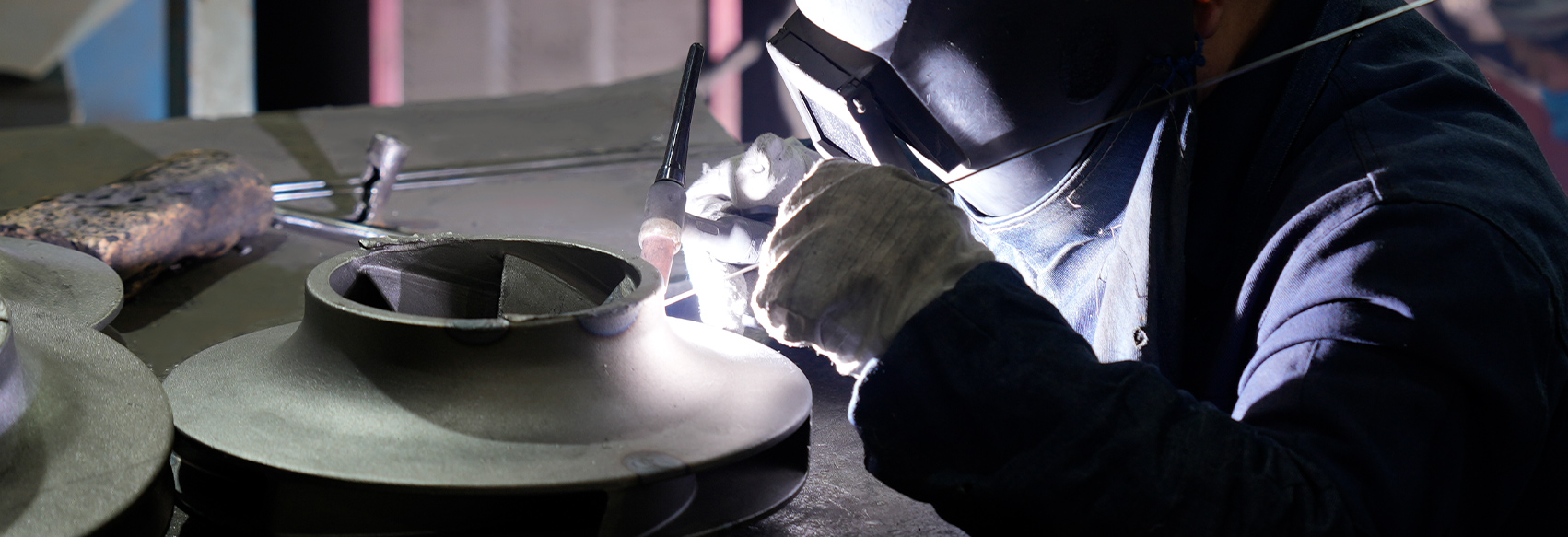
When a radiant tube cracks on a Tuesday afternoon, the damage is rarely limited to the tube itself. The line stops, the workload inside the furnace is compromised, and even a stocked replacement takes hours to cool down, swap, and re-commission. In high-temperature processing, furnace spare parts are not commodity items to be bought on price alone. The material grade, the casting process, and the supplier's quality control decide how long a part survives, how often the line stops, and the true cost per operating hour. This guide is for maintenance, purchasing, and equipment-build teams that specify furnace spare parts for heat treatment, steel, and petrochemical applications. It explains which parts fail, why they fail, how to compare material grades, and what to verify before approving a supplier.
What Counts as a Furnace Spare Part
Furnace spare parts fall into two groups: consumable wear items and long-cycle structural components. In a typical continuous or batch furnace, the components that most often require replacement include:
- Radiant tubes and W-type radiant tubes
- Hearth rollers, water-cooled furnace rollers, and furnace bottom rollers
- Material trays, baskets, and workpiece trays
- Heat treatment frames, charge frames, and pit-type furnace frames
- Recuperators and heat exchangers coupled with radiant tubes
- Sink rollers for galvanizing lines
- Screw conveyors and agitators for special furnace atmospheres
These parts share one defining characteristic: they spend their service life inside an envelope of high temperature, mechanical loading, and usually an aggressive furnace atmosphere. That combination drives the two dominant failure modes — thermal fatigue from repeated heating and cooling, and creep from prolonged exposure to temperatures near the material limit. Carburization, oxidation, and abrasive wear follow close behind.
Match the Alloy Grade to the Operating Envelope
The first decision is not which foundry to call; it is which material grade the part should be cast from. Selecting the wrong grade makes early failure a matter of time regardless of casting quality. The table below summarizes the grades most commonly used for furnace spare parts and the service envelope each one covers.
Approximate continuous service limits for common furnace spare part grades; exact values depend on atmosphere, stress level, and component geometry.
| Material grade |
Common designation |
Service temperature |
Typical furnace application |
| 1.4848 |
GX40CrNiSi25-20 |
~1050 °C |
Trays, frames, recuperators, water-cooled rollers |
| 1.4852 |
GX40NiCrSiNb35-26 |
~1100 °C |
Radiant tubes, hearth rollers (niobium-strengthened) |
| 2.4879 |
GNiCr28W |
~1150 °C |
Rollers, radiant tubes, screw conveyors (tungsten-strengthened) |
| HP type |
26Cr35Ni |
~1100 °C |
Agitators and high-load fixtures |
| 316L / CF3M |
— |
~870 °C; corrosion service |
Corrosion-resistant sleeves in chemical environments |
| GX280 |
KMTBCr26 |
Abrasive wear service |
Wear-resistant inner cylinders and mining machinery parts |
The temperature difference between grades directly affects part life. The chart below compares the standard heat-resistant grades used for furnace internals.
1.4848~1050 °C
1.4852~1100 °C
2.4879~1150 °C
HP 26Cr35Ni~1100 °C
A difference of 50 °C in allowable temperature may sound modest, but the creep rate of heat-resistant cast steel roughly doubles for every 15 to 20 °C increase in metal temperature. The practical consequence is direct: a radiant tube for a furnace running at 1080 °C can be cast from 1.4848, but it will creep visibly faster than a tube cast from 1.4852, where niobium adds high-temperature strength. If the atmosphere is also carburizing, the life difference between the two grades can reach a factor of two. This is the essence of how alloying elements work in heat-resistant steel: nickel stabilizes the austenitic structure, chromium builds oxidation resistance, and niobium or tungsten strengthens the matrix at operating temperature.
Casting Process Is a Hidden Variable
The best grade performs poorly if it is cast badly. The casting process determines metal density, corner soundness, wall-thickness consistency, and the surface quality that the part presents to the furnace atmosphere. Three process routes cover most furnace spare parts:
- Investment casting, including lost-wax and lost-foam lines, suits complex geometries, thin walls, and close tolerances — the typical requirement for trays, hangers, and frames.
- Centrifugal casting produces a dense, directionally solidified wall in tubular parts such as radiant tubes, rollers, and sleeves. It also allows parts from roughly 50 mm to 1000 mm in diameter and up to 4000 mm in length to be cast in one piece.
- Resin sand casting is the economical route for large, heavy-walled components with less demanding tolerances.
Each process leaves a measurable fingerprint. Centrifugally cast tubes contain fewer internal shrinkage defects than statically cast tubes, which matters for a radiant tube exposed to internal pressure and steep thermal gradients. Investment-cast trays achieve better dimensional consistency than sand-cast equivalents, reducing local hot spots where a distorted tray concentrates load. When a supplier is explicit about its process line, it is also telling you which failure modes it can design around.
What to Check Before You Approve a Supplier
Furnace spare parts fail slowly, then fail suddenly. Because the cost of failure is measured in downtime rather than in the part itself, the supplier's quality control matters more than the quoted price. The basic verification points for heat-resistant castings are:
- Chemical composition verified by direct-reading or handheld spectrometry — carbon, chromium, nickel, silicon, niobium, and tungsten must sit inside the grade window, not merely close to it.
- Metallographic analysis to confirm a normal grain structure and the absence of harmful carbide networks.
- Dimensional inspection with 3D scanning when castings are machined to close tolerances.
- Traceability linking each part to its heat number and inspection records.
Procurement risk concentrates in three places: off-spec composition, internal porosity hidden below a machined surface, and incorrect post-casting heat treatment. These are exactly the issues that spectrometers, metallographic analyzers, and 3D scanners are designed to catch. A foundry that runs this equipment in-house, rather than relying only on external certificates, is easier to audit and more consistent from batch to batch. Wuxi Dongmingguan Special Metal Manufacturing, for instance, lists direct-reading and handheld spectrometry, metallographic analysis, and 3D scanning as standard inspection steps, which is the level of transparency a furnace operator should expect from any qualified supplier.
Where Furnace Spare Parts Fail in Real Operations
Each category of furnace spare part has a characteristic failure pattern. Knowing it helps you specify the grade and process that address the actual wear mechanism.
Radiant tubes
Radiant tubes fail mainly by thermal fatigue cracking and creep bulging. In a carburizing atmosphere, the tube can carburize from the inner surface, lose ductility, and crack at a weld or bend. The standard answer for burner-tube service is a niobium-stabilized grade such as 1.4852, produced as a centrifugally cast tube with a dense wall.
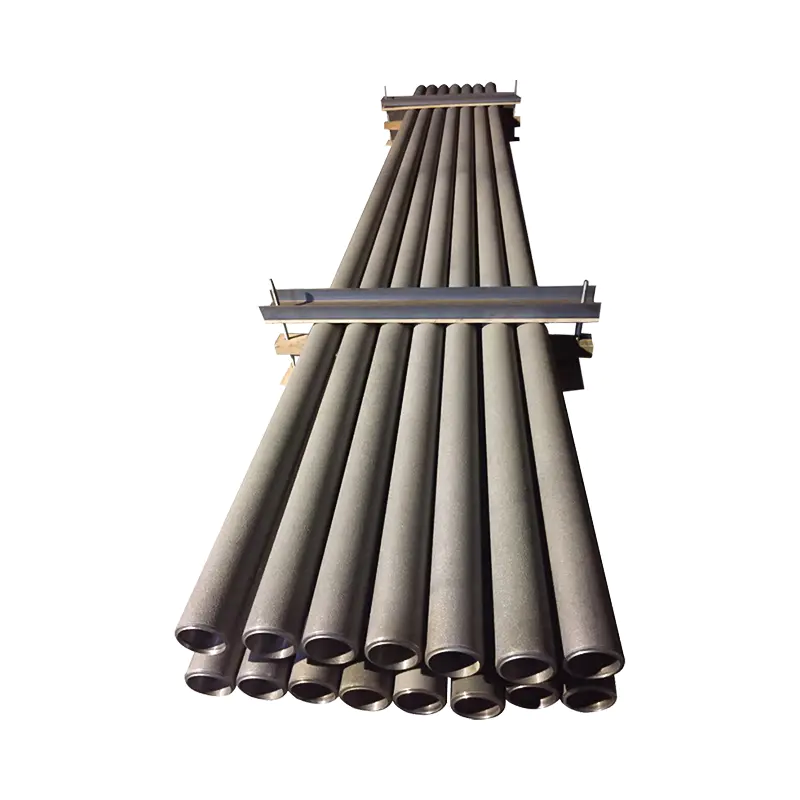 1.4852 Centrifugal Cast Radiant Tube for Burner ServiceThis niobium-stabilized radiant tube is designed for burner-tube service in carburizing atmospheres, where thermal fatigue and creep bulging are common. Its dense centrifugally cast wall resists inner-surface carburization and cracking at welds or bends.View Product →
Furnace rollers
Rollers bend. A hearth roller carries the weight of the moving strip or slab while experiencing thermal shock every time the line speed changes. Water-cooled rollers add an internal cooling boundary that complicates the casting design. Centrifugal casting in 1.4848 or 2.4879 provides the wall density needed to resist bending and surface wear at operating temperature.
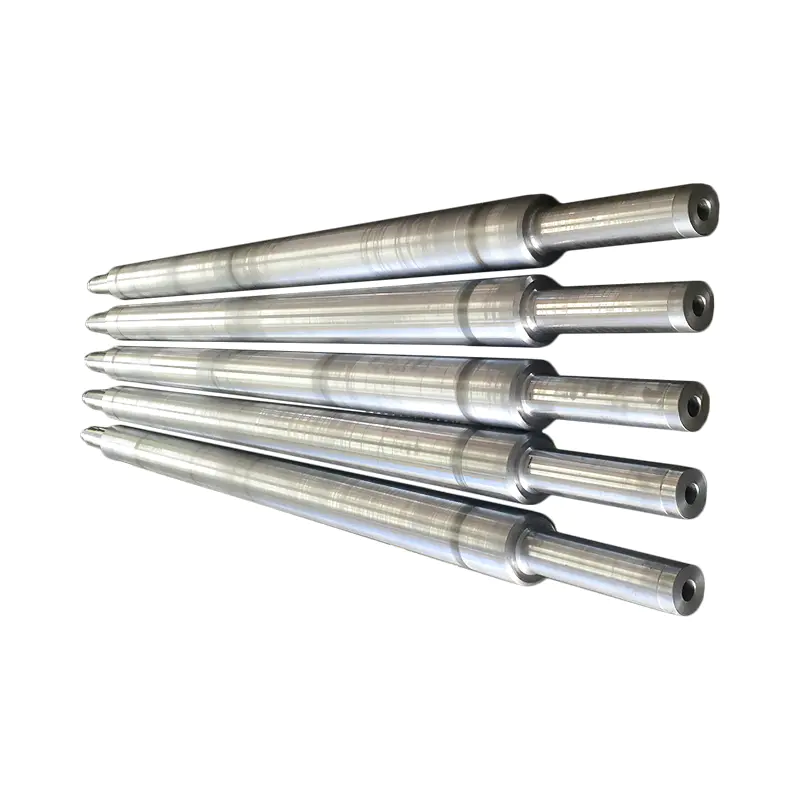 1.4848 Water-Cooled Furnace Roller for Thermal ShockThis water-cooled roller uses temperature equalization to transfer heat quickly to the ends, maintaining surface temperature above dew point while cooling hot materials. It suits lines where rollers experience thermal shock from speed changes and carry moving strip or slab.View Product →
Material trays and frames
Trays, baskets, and charge frames distort faster than any other furnace component because they are moved into and out of the heat with every batch, while the weight of the workload sits directly on them. Investment-cast 1.4848 trays are the workhorse of carburizing and hardening shops; for heavier service, designers move up to 2.4879, where tungsten strengthens the matrix at high temperature.
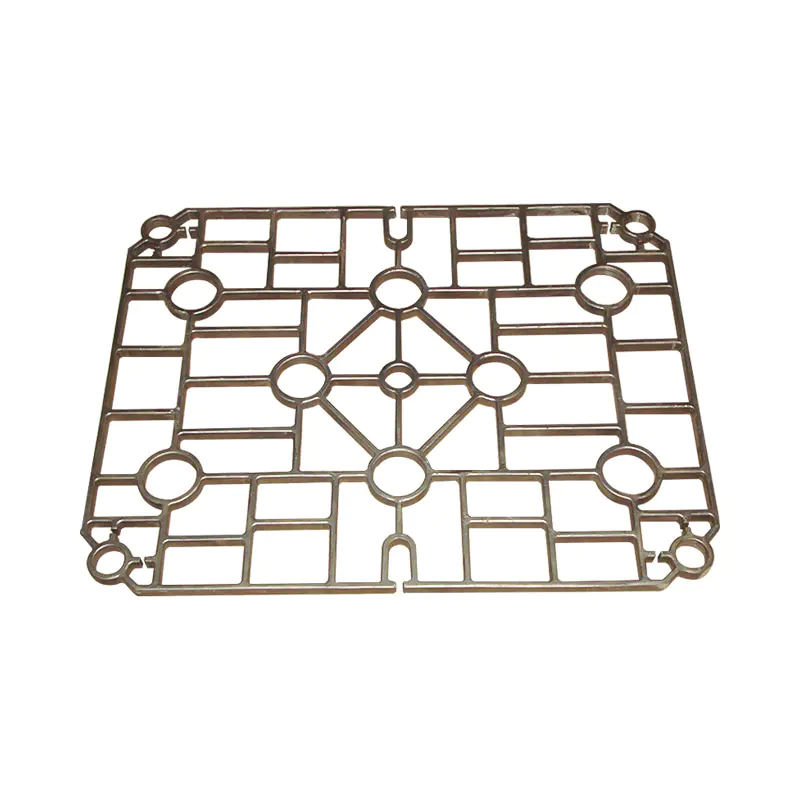 1.4848 Continuous Furnace Material Tray for High-Temperature LoadingThis heat-resistant steel tray is built for repeated high-temperature loading in heat treatment furnaces, offering high space utilization for storing and transporting multiple workpieces. It suits batch operations where trays distort faster than other components due to workload weight and cycling.View Product →
Industry-Specific Considerations
The same spare part can behave differently depending on the industrial environment, so it pays to work with a supplier who understands the operating context.
- Heat treatment: batch and continuous furnaces expose trays, fixtures, and frames to hundreds of thermal cycles; dimensional stability and oxidation resistance dominate. The heat treatment industry therefore favors investment-cast grades such as 1.4848 and 2.4879 for internal fixtures.
- Steel industry: hearth rollers, radiant tubes, and furnace bottom rollers run continuously under heavy mechanical load; creep resistance and wall density come first.
- Chemical and petrochemical sector: corrosion resistance becomes the priority — 2205 and 316L cast sleeves protect equipment against aggressive media, while HP-type 26Cr35Ni copper-alloy agitators handle stirred reaction vessels.
- Galvanizing lines: sink rollers operate at the boundary between the strip and the molten bath, requiring both heat resistance and surface stability.
A supplier that has delivered castings across these industries will ask about the furnace type, atmosphere, cycle time, and loading pattern before recommending a grade. That conversation is usually worth more than the last few percentage points of discount.
Selecting furnace spare parts is a four-step decision:
- Define the operating envelope: peak temperature, atmosphere, loading, and cycling.
- Select the alloy grade that fits that envelope with margin.
- Choose the casting process that matches the part geometry and the dominant failure mode.
- Verify that the supplier backs the casting with composition control, inspection equipment, and traceability.
Work against the failure pattern rather than against the price tag, and the cost per operating hour will follow.




 English
 Español
 عربى
عربى