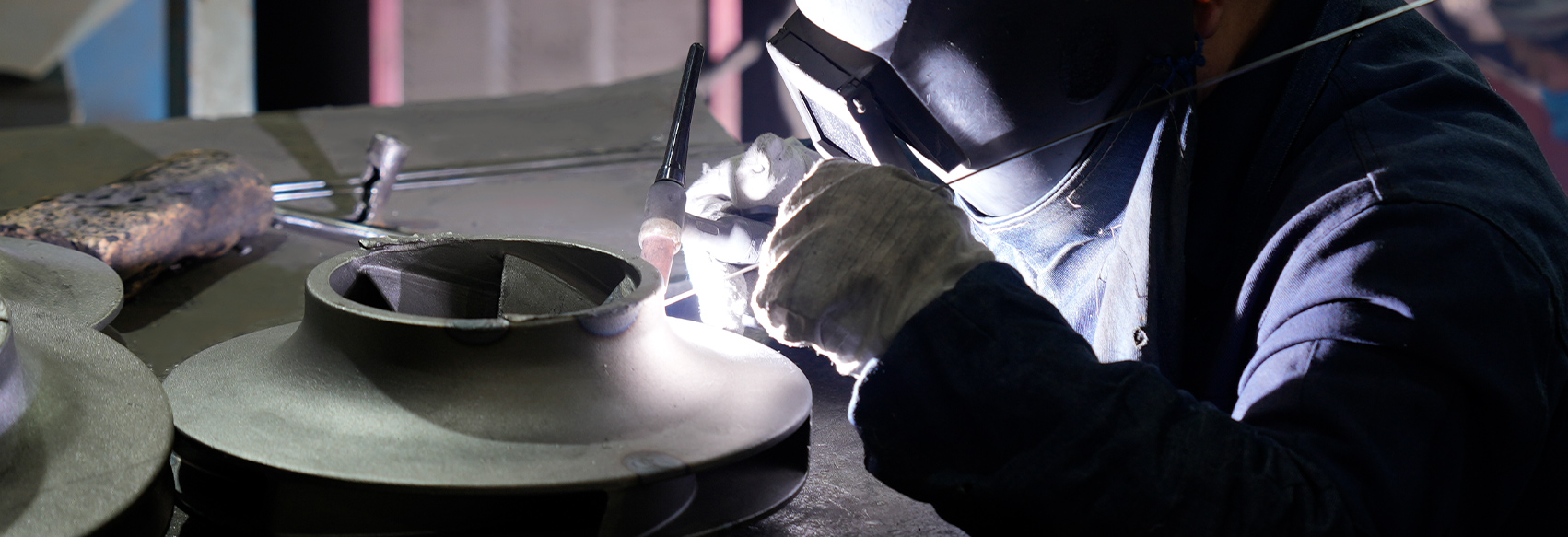
Every maintenance planner in a heat treatment shop knows the same scene: a tray is pulled from the furnace with cracks radiating from its corners, a radiant tube shows a hairline fracture near its header, and the line stops while a replacement is sourced. The decision that led to that failure, however, was made months earlier, at the specification stage. Premature failure of heat treating furnace parts is rarely a random event. Once the operating temperature, furnace atmosphere, loading pattern, and casting quality are examined together, the cause becomes predictable, and so does the prevention.
Durability is decided before a part is installed. Three factors control it: the material grade, the casting process, and the supplier's ability to verify the part against its specification. This article explains how each factor influences service life, where the main failure mechanisms start, and what to check when you order replacement trays, fixtures, radiant tubes, and rollers.
Why Heat Treating Furnace Parts Fail Prematurely
Four damage mechanisms account for nearly every premature failure in furnace trays, frames, fixtures, radiant tubes, and rollers. All of them are accelerated by the same two root causes: a grade that does not match the actual operating envelope, and casting defects that act as stress raisers. Understanding the mechanisms is the first step toward preventing them.
Thermal Fatigue
Thermal fatigue begins as surface cracks that develop when the outer layer of the part expands and contracts faster than the core during heating and cooling cycles. Repeated cycling propagates the cracks into the cross-section. Thin edges and sharp corners crack first, which is why part geometry matters as much as alloy chemistry.
Creep Deformation
Creep is the slow, time-dependent deformation of metal under load at high temperature. A tray that sags in the middle, or a frame that gradually loses its flatness, has been running near the creep limit of its grade. Creep becomes dominant once the metal approaches a significant fraction of its melting temperature, which is why any part operating above 1000°C should be specified in a grade designed for that range.
Oxidation and Carburization
Oxidation forms scale on the surface. Carburization, however, is often the more damaging attack in heat-treating atmospheres: carbon diffuses into the alloy and forms grain-boundary carbides that reduce ductility and promote cracking. High-nickel grades resist carburization significantly better than low-nickel alternatives.
Mechanical Overload
Loads beyond the design intent, uneven weight distribution from improperly placed workpieces, and impact during loading all push a part outside its intended stress range. A design review should include the weight distribution of the actual workload, not just the total mass.
Choosing the Right Material Grade for Heat Treating Furnace Parts
The grade is the first decision, and it must match the highest temperature the part will see, including brief peaks during charging, not just the nominal furnace setting. A tray that runs at 980°C but spikes to 1050°C during loading needs a different grade than one that never exceeds 950°C. Specifying a grade with margin above the operating window is the cheapest insurance available.
Four grades cover the majority of parts used in continuous and batch heat treating equipment.
Operating temperature is the main selection driver; atmosphere and loading refine the final grade choice.
| Grade |
Designation |
Max Continuous Service Temperature |
Key Characteristics |
Typical Parts |
| 1.4848 |
GX40CrNiSi25-20 |
Around 1050°C |
Good thermal fatigue resistance; balanced cost and performance |
Trays, frames, hooks, gear racks |
| 1.4852 |
GX40NiCrSiNb35-26 |
Around 1100°C |
Niobium-stabilized; higher creep strength; improved carburization resistance |
Radiant tubes, furnace hearth rollers |
| 2.4879 |
GNiCr28W |
Around 1150°C |
Tungsten-strengthened; outstanding high-temperature strength |
Furnace rollers, radiant tubes, screw conveyors |
| HP type |
26Cr35Ni |
Around 1150°C |
High chromium and nickel; excellent oxidation and carburization resistance |
Reformer tubes, high-temperature agitators |
Temperature is the primary driver, but atmosphere and loading shift the final choice. In the 1000–1050°C range, 1.4848 is the workhorse grade. Above 1050°C, 1.4852 adds niobium to stabilize the structure and improve carburization resistance. Above 1100°C, 2.4879 relies on tungsten to maintain creep strength where simpler grades would deform within weeks.
Furnaces that run carburizing or endothermic atmospheres attack the part surface much faster than air. High-nickel grades such as 2.4879 and HP-type 26Cr35Ni are often specified in those lines because they delay surface carburization, not only because they tolerate higher temperatures.
Trays, Frames, and Fixtures: Balancing Weight and Strength
Once the grade is selected, the shape of the part determines how long it survives. Trays, frames, and fixtures carry the workload in batch and continuous furnaces, and their design must balance load capacity, thermal mass, and stress concentration. A common mistake is to specify a thicker part expecting a longer life. In practice, thicker sections increase thermal gradients because the core lags behind the surface during heating and cooling, and those gradients create internal stress that turns into cracks.
A well-designed casting uses ribs and cutouts to reduce mass while preserving stiffness. Weld-fabricated fixtures are still common in lower-temperature lines, but weld seams remain natural crack initiation sites because the heat-affected zone is structurally different from the base metal. One-piece castings eliminate that weakness.
For continuous furnaces and sealed-quench units, many maintenance managers now specify cast heat treatment frames instead of welded assemblies because the monolithic structure holds its shape through thousands of cycles.
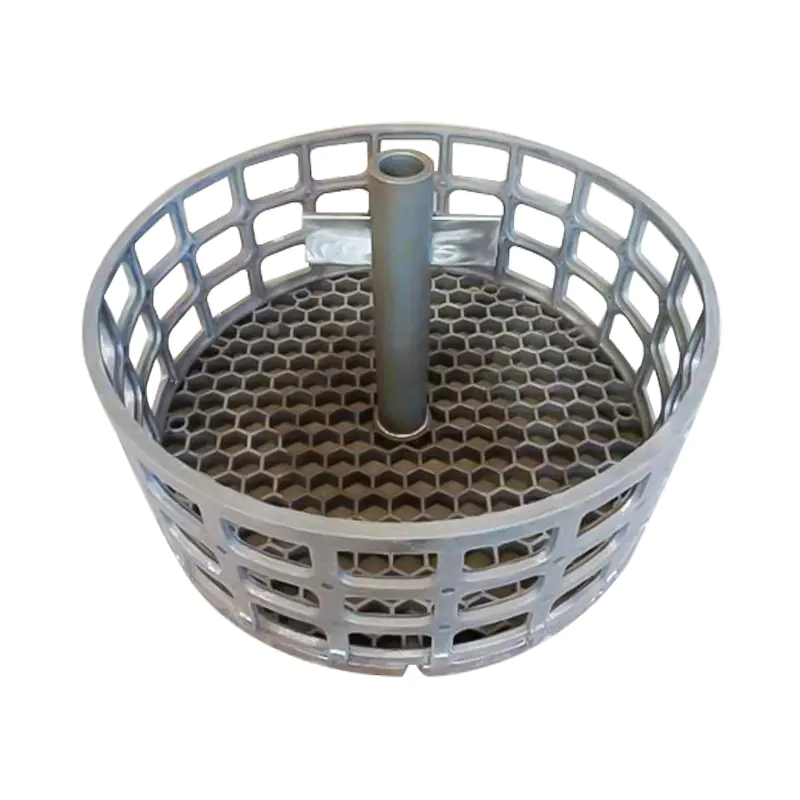 Custom Precision Casting 1.4848 (GX40CrNiSi25-20) heat treatment frame SuppliersWuxi Dongmingguan Special Metal Manufacturing Co., Ltd. is China Precision Casting 1.4848 (GX40CrNiSi25-20) heat treatment frame Supplier...View Product →
When reviewing tray and fixture drawings, apply these geometry rules:
- Keep wall thickness as uniform as possible; use ribs for stiffness instead of adding solid thickness.
- Specify generous internal radii; sharp corners are crack initiation points.
- Distribute support points to avoid point loading from the workload.
- Leave allowance for thermal expansion between the tray and the furnace hearth.
Radiant Tubes and Furnace Rollers: The Centrifugal Casting Difference
Radiant tubes and furnace rollers face some of the most severe conditions in the furnace: direct burner heat, high surface temperatures, and continuous thermal cycling. For cylindrical parts like these, the casting process has a measurable effect on service life.
Centrifugal casting produces a dense, uniform tube wall with few shrinkage voids and a fine-grained structure that manages thermal stress better than static castings. The part forms as a seamless tube, removing the longitudinal weld seam that is the most common crack path in fabricated designs. Seamless construction also provides better concentricity and consistent wall thickness, which improves both heat transfer and mechanical stability.
In high-alloy materials, this process covers external diameters from roughly 50mm to 1000mm and lengths up to 4000mm, which covers most radiant tube and furnace roller applications.
When replacing radiant tubes, specify centrifugally cast radiant tubes in 1.4852 or 2.4879 to match the thermal and atmospheric demands of continuous furnaces.
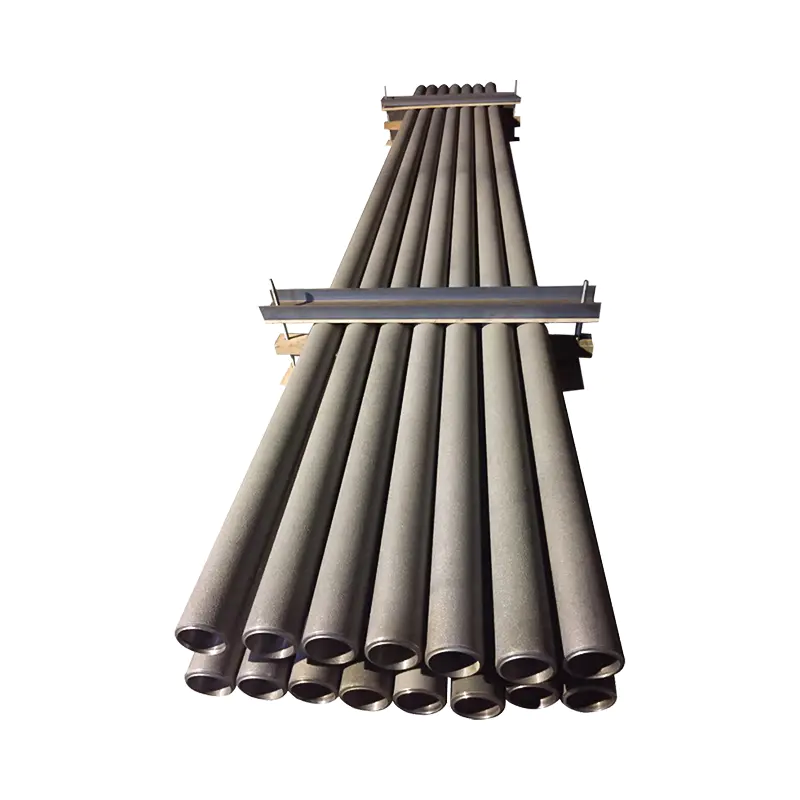 Custom Centrifugal Casting 1.4852 (GX40NiCrSiNb35-26) radiant tube Suppliers, OEWuxi Dongmingguan Special Metal Manufacturing Co., Ltd. is China Centrifugal Casting 1.4852 (GX40NiCrSiNb35-26) radiant tube Suppliers an...View Product →
On the conveying side, water-cooled furnace rollers cast in 1.4848 give continuous furnace lines a reliable combination of oxidation resistance and stable cooling over long campaign periods.
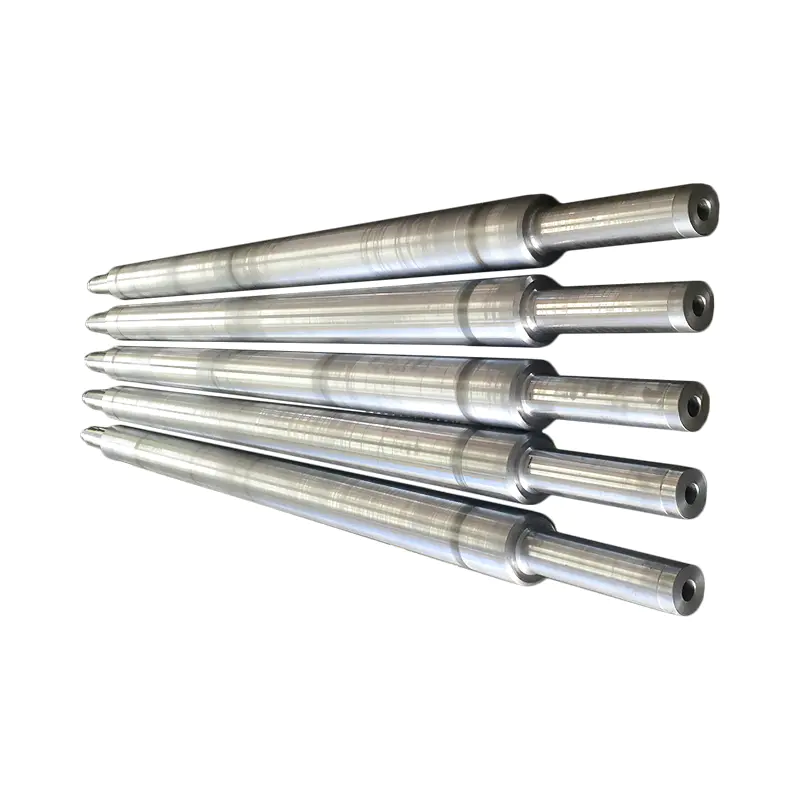 Custom Centrifugal Casting 1.4848(GX40CrNiSi25-20)Water Cooling Furnace Roller SWuxi Dongmingguan Special Metal Manufacturing Co., Ltd. is China Centrifugal Casting 1.4848(GX40CrNiSi25-20)Water Cooling Furnace Roller ...View Product →
What to Look For in a Furnace Parts Supplier
The nominal grade printed on a quotation means nothing unless the foundry can prove that the delivered part matches it. The difference between a part that lasts six months and one that lasts five years is often the supplier's control over chemistry, casting soundness, and dimensional accuracy, not the alloy price.
Verification should include at least the following at a competent specialty foundry:
- Direct-reading spectrometer analysis on every heat to confirm chemical composition.
- Metallographic examination to verify carbide structure and casting soundness.
- Dimensional inspection, including 3D scanning for complex geometries, so the part matches the drawing.
- Post-casting heat treatment and machining so the delivered part is ready to install.
A supplier that keeps multiple casting routes in-house can match the process to the geometry. Investment casting, including lost-foam lines, handles complex trays and fixtures with good surface detail. Centrifugal casting is the natural process for tubes and rollers. Resin-sand molding handles larger production-scale parts. Keeping all three routes under one roof shortens lead times because no step is subcontracted.
A foundry that already supplies the heat treatment equipment industry carries field experience that translates into more reliable parts and faster problem solving.
Purchasing Advice: Lifecycle Cost, Not Unit Price
Furnace part purchasing should be a lifecycle cost calculation. A part that costs twice as much but delivers four times the service life halves the cost per operating hour, and it avoids the production losses that no supplier can compensate. The following checklist helps at the next order:
- Define the operating envelope precisely, including peak temperature, atmosphere composition, and cycle length.
- Select a grade with margin above the nominal temperature, not just at it.
- Request chemical and metallographic test reports with every batch and keep them on file.
- Use one-piece castings where welded assemblies have failed before.
- Track actual service life per part so the next specification can be adjusted with data.
These steps work best when combined with a structured maintenance approach for heat treating furnace parts that maps failure intervals, inspection points, and replacement timing together.
The lowest bid is rarely the lowest cost. Invest the time in grade selection, casting process, and supplier verification, and the furnace will reward you with longer, more predictable running periods between maintenance stops.




 English
 Español
 عربى
عربى