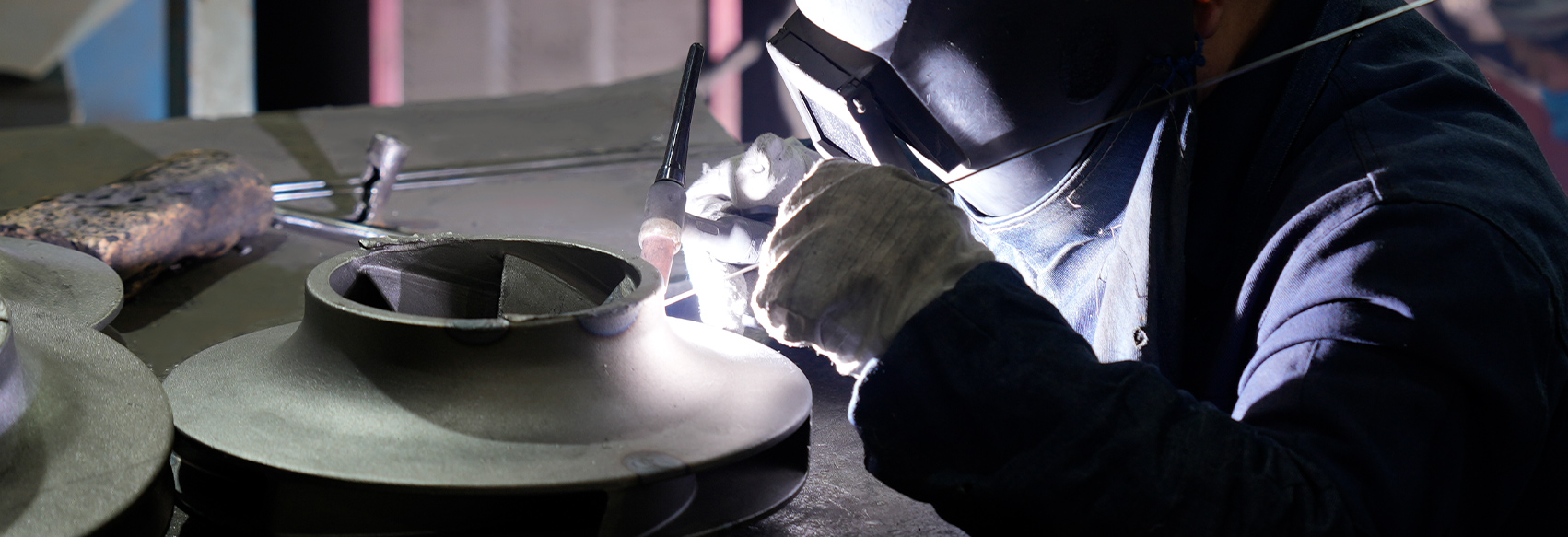
A furnace shutdown caused by a cracked radiant tube is expensive in ways that go far beyond the replacement part: lost production, cooling and reheating cycles, and the labor to strip and rebuild the furnace. That is why plant engineers increasingly specify centrifugal cast pipe for high-heat, corrosive, and abrasive service. The process produces a dense, directionally solidified tube with no longitudinal weld seam, giving it better creep, oxidation, and thermal-fatigue performance than statically cast or welded alternatives. This article explains how centrifugal cast pipe is made, which alloy grades to choose, where it is used, and what to verify before you place an order.
What makes centrifugal cast pipe different
Centrifugal casting uses a rotating mold to shape a tubular part from the inside out. Molten metal is poured into the spinning mold, and centrifugal force presses the liquid against the mold wall while it solidifies. The result is a pipe wall with a fine columnar grain structure, very low porosity, and an inclusion-rich inner layer that is machined away before the part ships. The process follows a short sequence:
- The steel mold is preheated and lined with a refractory coating.
- Molten alloy is delivered through a launder into the rotating mold.
- Centrifugal force holds the metal against the mold wall and drives lighter inclusions toward the bore.
- The wall solidifies directionally from the outside diameter toward the inside diameter.
- The tube is extracted, heat-treated if required, and the bore is machined to final dimensions.
Compared with static sand casting, centrifugal casting produces fewer internal shrinkage defects because the rotating geometry controls solidification. Compared with welded pipe, it has no seam and can be made in high-nickel alloys that are difficult to roll or weld. For a more detailed treatment of the physics and process window, see our overview of the basic principles and process characteristics of centrifugal casting. The table below summarizes the practical differences between the three manufacturing routes.
Comparison of manufacturing routes for high-alloy pipe
| Property |
Centrifugal cast pipe |
Static cast pipe |
Welded or wrought pipe |
| Grain structure |
Columnar, directionally solidified |
Equiaxed, coarser |
Wrought, follows forming direction |
| Internal soundness |
Very low porosity |
Shrink porosity risk |
Dense, but seam present |
| Alloy flexibility |
High |
High |
Limited to formable and weldable grades |
| Pressure tightness |
Excellent |
Moderate |
Good |
| Typical OD range |
50–1000 mm |
Shape-dependent |
Forming-capacity dependent |
| Relative cost |
Moderate |
Lower for simple shapes |
Higher for high-alloy grades |
Matching the alloy to the service condition
The casting process delivers the shape, but the alloy delivers the service life. Peak temperature, furnace atmosphere, and the presence of chlorides, sulfur, or abrasive particles determine the correct grade. The grades listed below cover the conditions most often encountered in industrial furnace, chemical, and wear applications.
Common centrifugal cast pipe alloys and their typical service
| Grade |
Type or standard |
Typical service limit |
Representative components |
| 1.4848 |
GX40CrNiSi25-20 |
~1050 °C |
Material trays, frames, recuperators |
| 1.4852 |
GX40NiCrSiNb35-26 |
~1100 °C |
Radiant tubes, furnace hearth rollers |
| 2.4879 |
GNiCr28W |
~1150 °C |
Furnace rollers, radiant tubes, screw conveyors |
| HP-type 26Cr35Ni |
Heat-resistant cast alloy |
Up to ~1150 °C |
Pyrolysis and reformer tubes, agitators |
| 2205 |
CD3MN duplex stainless |
Wet chloride service |
Corrosion-resistant sleeves |
| 316L |
CF3M austenitic stainless |
Wet corrosive service |
Long-life anticorrosion sleeves |
| 440C |
High-carbon stainless |
Abrasive wear duty |
Grinding inner cylinders |
| GX280 |
KMTBCr26 high-chromium iron |
Severe abrasion |
Wear liners, mining machinery casings |
For radiant tubes and furnace rollers, niobium-stabilized 1.4852 resists oxidation and carburization in hydrocarbon-rich atmospheres, which makes it one of the most common choices in industrial furnaces. If the operating temperature regularly exceeds 1,100 °C, a tungsten-bearing grade such as 2.4879 retains more creep strength over long campaigns.
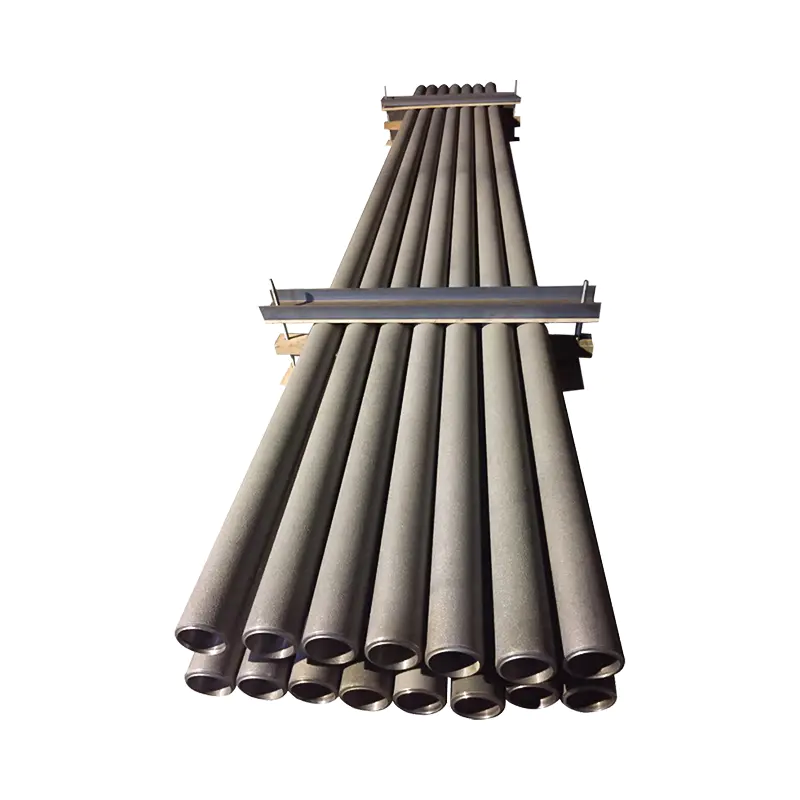 1.4852 Niobium-Stabilized Radiant Tube for Furnace HeatingThis niobium-stabilized 1.4852 radiant tube suits furnace rollers and heating elements where oxidation and carburization are concerns. Its heat-resistant rating and size range make it a practical option for hydrocarbon-rich furnace atmospheres.View Product →
Never specify an alloy by name alone. Always confirm the exact standard, the furnace atmosphere, and the coldest zone of the component, because corrosive attack is often worse at lower temperatures than at peak heat.
From heat-treatment furnaces to chemical process lines
Each industry stresses the pipe differently. In heat treatment and steel production, the enemy is thermal cycling; in chemical plants, it is localized corrosion; in mining, it is abrasive wear. The same casting process serves all three, but the alloy and quality requirements differ.
Heat treatment and steel production
In the heat treatment industry, centrifugal cast pipe is used for radiant tubes, water-cooled furnace rollers, hearth rollers, and fixture components that must survive continuous thermal cycling. The uniform wall and dense structure distribute stress evenly and resist the quench-and-heat cycles that crack thin fabricated tubing. Our foundry produces high-alloy centrifugal cast tubes from 50 mm to 1,000 mm outside diameter in lengths up to 4,000 mm, which covers most furnace roller and radiant tube applications. For a closer look at the components used inside furnaces, see our heat-treatment industry page.
Chemical and petrochemical processing
Corrosion, not temperature, drives material selection in chemical plants. Duplex 2205 and 316L centrifugal cast pipes protect shafts and structural tubes in chloride and acid service; their dense wall resists pitting and crevice corrosion much better than a sand casting of the same chemistry.
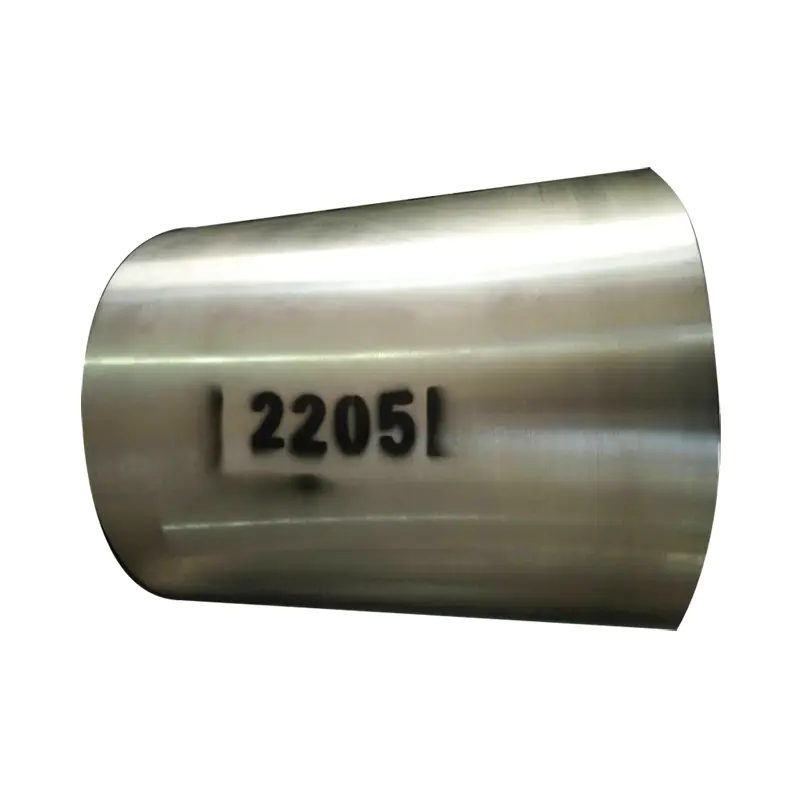 2205 Duplex Stainless Steel Corrosion-Resistant Sleeves for PumpsThese 2205 duplex stainless sleeves protect pump shafts and impeller retaining sleeves in chloride and acid environments. Their cast pipe construction resists pitting and crevice corrosion, extending equipment life in corrosive pumping systems.View Product →
Mining and abrasive handling
Where abrasion dominates, high-chromium iron such as GX280 (KMTBCr26) provides a very hard, dense microstructure. Grinding mill inner cylinders and mining machinery casings made by centrifugal casting outlast rolled or welded liners in severe wear service.
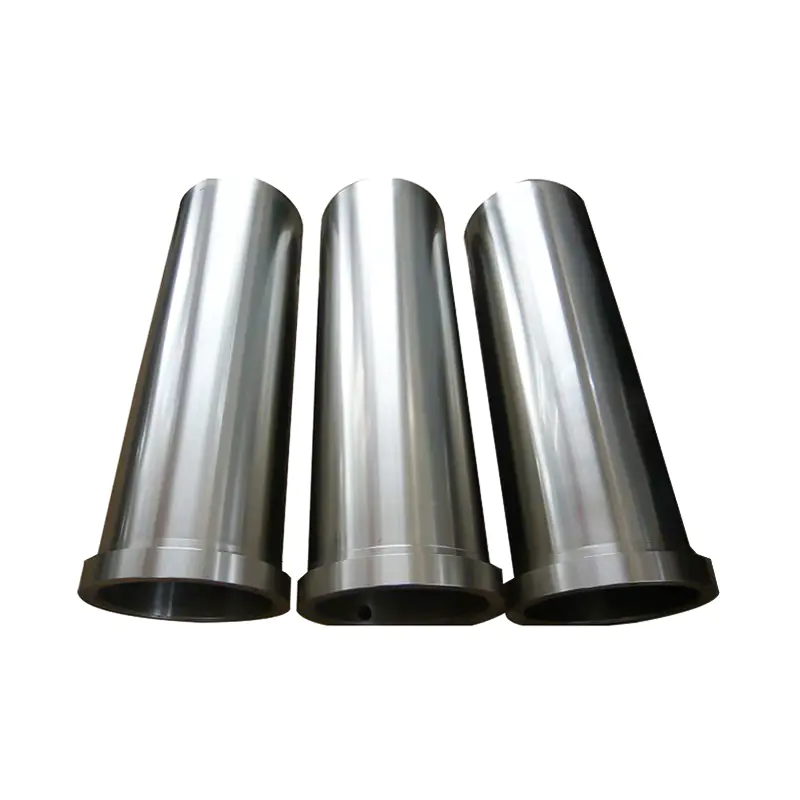 GX280 High-Chromium Wear-Resistant Inner Cylinder for Grinding MillsThis GX280 (KMTBCr26) high-chromium inner cylinder provides a hard, dense microstructure for mining and powder grinding equipment. After quenching to high hardness, it withstands severe abrasion and impact, reducing replacement frequency in tough service.View Product →
Production limits, tolerances, and testing
A reliable foundry should state its size envelope in writing. Our production range for high-alloy centrifugal cast tubes is 50 mm to 1,000 mm outside diameter and up to 4,000 mm in length. Within that envelope, practical tolerances depend on grade, wall thickness, and whether the bore is machined; typical machined bores hold close dimensional control, while as-cast surfaces carry larger allowances.
Before accepting any centrifugal cast pipe, confirm that the foundry can verify what it delivers:
- Chemical composition checked by optical emission spectroscopy, using both direct-read and handheld instruments.
- Microstructure confirmed by metallographic analysis.
- Geometry verified with dimensional inspection, including three-dimensional scanning for complex profiles.
- Heat treatment and machining performed in-house so the delivered part is ready to install.
Insist on material certificates, and agree on additional ultrasonic or dye-penetrant testing before production starts if the component is safety-critical.
What to specify before ordering
A well-written inquiry prevents most supply problems. Include the following information in your request for quotation:
- Exact grade and standard, for example 1.4852 per EN 10295.
- Outside diameter, wall thickness, and length, with tolerances.
- Machining allowance and final surface condition.
- Location and size of any holes, slots, or flanges.
- Required testing: spectro analysis, hardness, metallographic, pressure test, or full traceability.
- Delivery condition: as-cast, heat-treated, machined, or fully finished.
The lowest quote is rarely the most economical one. A pipe that fails mid-campaign stops the furnace and multiplies its own cost several times over in lost production. Choose a foundry that controls chemistry, casting, heat treatment, and machining under one roof and can document each step.
Centrifugal cast pipe earns its place wherever ordinary pipe reaches its limit: radiant tubes cycling above 1,000 °C, rollers carrying loads through furnace atmospheres, sleeves standing up to chlorides, and liners fighting abrasive ore. The three decisions that matter most are the alloy, the process control, and the acceptance tests you agree on. Get those right, and a centrifugal cast pipe will often outlast the furnace campaign it was fitted into.




 English
 Español
 عربى
عربى