Most corrosion failures on cast components trace back to one of two decisions made long before the first heat was poured: the grade was matched to a data sheet instead of to the real environment, or the grade was right and the casting was not. Both are cheap to correct on the drawing and expensive to correct on a shutdown schedule.
The short version: match the alloy to the dominant corrosion mechanism, then to temperature, then to a casting process that can deliver a sound section. Write the process route, the ferrite balance and the inspection method into the purchase order, because "corrosion-resistant castings" describes a category, not a specification. A 2205 sleeve with unbalanced ferrite and interconnected porosity will lose to a clean CF3M sleeve in the same scrubber line, at a fraction of the price.
Start With the Environment, Not the Grade Name
Three questions settle most of the selection before any grade is shortlisted: how much chloride is in the electrolyte, what the metal temperature is, and whether the surface stays wetted or sits under deposits. Chloride drives pitting and crevice attack. Temperature decides whether that attack accelerates into stress corrosion cracking. Deposits and stagnant zones starve the surface of oxygen, and a passive film that cannot re-form is a passive film that fails.
A workable rule for cast stainless: CF3M, the cast equivalent of 316L, is comfortable in neutral water below roughly 200 ppm chloride and below about 60 °C. Once chlorides pass 1,000 ppm, or the design contains crevices you cannot eliminate, CD3MN (cast 2205 duplex) usually wins on total cost even at a higher piece price, because wall thickness often stays the same while service life multiplies.
Environment-first shortlisting. The mechanism column matters more than the grade column, because a grade chosen against the wrong mechanism fails regardless of price.
| Service environment |
Dominant mechanism |
Typical cast grade |
What to watch in the foundry |
| Neutral water, under 200 ppm chloride, under 60 °C |
Pitting, crevice attack |
CF3M (316L) |
Carbon below 0.03%, no unblended weld repairs |
| Seawater or brine, over 1,000 ppm chloride |
Pitting, crevice, chloride SCC |
CD3MN (2205) |
Ferrite 35–65%, nitrogen addition, no sigma phase |
| Dilute acid with chlorides, agitated vessel |
General plus localized attack |
CD3MN, higher Ni/Mo alloys |
Section soundness, as-cast skin removal |
| Dry flue gas, 800–1,150 °C |
Oxidation, sulphidation, creep |
1.4848, 1.4852, 2.4879 |
Chemistry balance, castability of thin fins |
| Molten zinc or aluminium contact |
Liquid metal attack, dross build-up |
316L roll bodies with barrier coating |
Surface finish, straightness, runout |
The common mistake is borrowing a heat-resistant grade for a wet duty. 1.4848 (GX40CrNiSi25-20) is a strong choice at 900–1,000 °C in oxidising gas, but it is not a seawater alloy, and its high carbon content makes it a poor candidate for wet chloride service where intergranular attack is a risk.
What "Corrosion-Resistant" Means Once the Metal Is Cast
Wrought data sheets do not transfer directly to castings. A casting solidifies with a coarser dendritic structure, more segregation between dendrite cores and interdendritic regions, and an as-cast skin that can be chemically different from the bulk. Three consequences matter to a buyer.
First, carbon control. CF3M holds carbon at 0.03% or below, CF8M at 0.08%. In a welded or thermally cycled part, that difference decides whether chromium carbides precipitate at grain boundaries and leave a sensitised band that corrodes in preference to the surrounding metal. Second, duplex balance. CD3MN needs roughly 35–65% ferrite; too little austenite invites cracking, too much ferrite invites selective attack and limits toughness, and holding the casting in the 700–950 °C range can precipitate sigma phase that destroys both corrosion resistance and ductility. Third, pitting resistance, which for stainless grades is commonly ranked by the pitting resistance equivalent number.
Pitting resistance equivalent number (PREN = Cr + 3.3Mo + 16N), typical cast values
CF3M (316L cast) — PREN ≈ 26
CD3MN (2205 cast) — PREN ≈ 35
1.4848 heat-resistant grade — PREN ≈ 25, not a wet-chloride alloy
Bars are scaled against a PREN of 50. PREN is a ranking tool, not a design limit; verify with immersion or electrochemical testing for critical duty.
Where chlorides and temperature climb together, nickel-based grades take over. 2.4879 (GNiCr28W) is a familiar choice for carburising atmospheres, sulphur-bearing flue gas and high-temperature screw conveyors, and it does not rely on the same passive film mechanics as the stainless family.
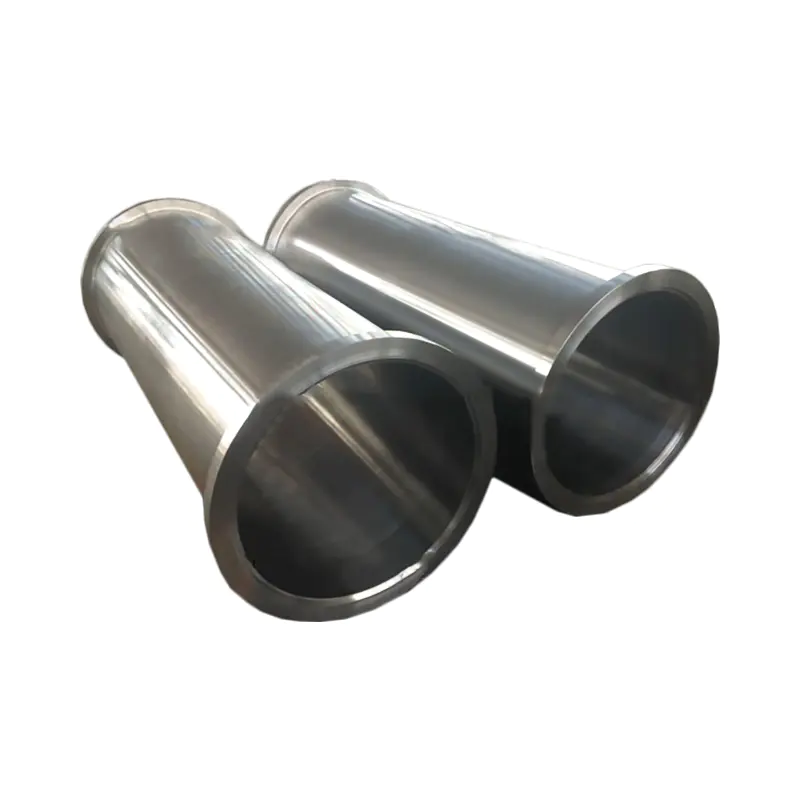 316L (CF3M) Centrifugal-Cast Stainless Steel Corrosion-Resistant SleevesCentrifugal-cast 316L sleeves for pump and impeller shafts, suited to chloride, seawater and chemical service where long-term corrosion resistance matters.View Product →
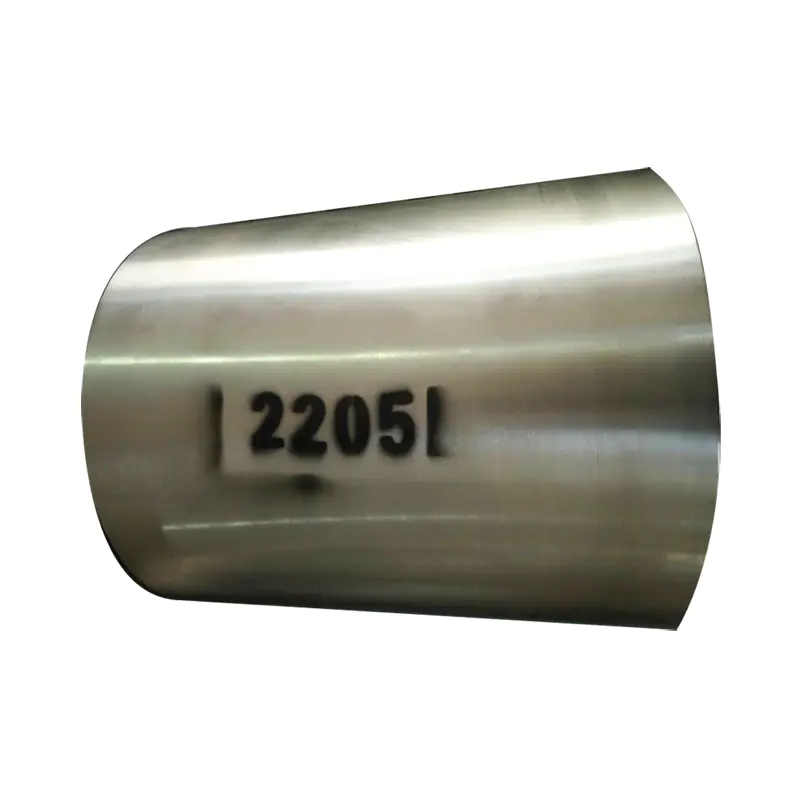 2205 (CD3MN) Duplex Stainless Steel Corrosion-Resistant Pump SleevesCentrifugal-cast 2205 duplex sleeves for pump and impeller retaining duty, offering pitting, chloride and stress-corrosion resistance in aggressive chemical and seawater environments.View Product →
The Casting Route Is Part of the Corrosion Specification
Two suppliers can quote the same grade, the same drawing and the same weight, and still deliver parts with very different corrosion life, because the solidification path decides where porosity, segregation and inclusions end up. Centrifugal casting throws dense metal against a rotating mould and pushes inclusions inward, which suits tubes, rolls and radiant tubes. Investment and lost-foam casting deliver complex geometry with better surface and tighter tolerance. Resin sand moulding handles large frames and trays where tooling cost would otherwise be prohibitive.
Table 2: Process selection by geometry and duty. Corrosion-critical surfaces usually justify the tighter tolerance of a precision route, even at a higher unit cost.
| Route |
Typical envelope |
Corrosion-relevant strength |
Where it hurts |
| Centrifugal casting |
50–1,000 mm outside diameter, up to 4,000 mm length |
Dense wall, low gas porosity, good for pipe and roll bodies |
Limited to rotationally symmetric shapes |
| Investment and lost foam |
Complex thin-wall parts, small to medium weight |
Superior surface, less machining stock, fewer surface defects |
Pattern cost per part number, size ceiling |
| Resin sand moulding |
Large frames, trays, heavy sections |
Low tooling cost, flexible batch size |
More machining allowance, higher risk of surface inclusions |
One practical detail often missed: corrosion starts at the as-cast skin. Shot-blasted, machined or pickled surfaces behave differently from a raw casting skin carrying mould reaction layers. If the drawing calls for a corrosion barrier, say so, and specify whether the bore, the outside diameter or both must be machined.
Where Cast Corrosion Resistance Earns Its Money
In chemical processing, the value shows up in agitated reactors and sleeve-protected shafts, where a copper-alloy agitator or a duplex sleeve keeps a maintenance window from becoming an unplanned outage. In heat treatment, the same logic applies at temperature: trays, frames, radiant tubes and furnace rollers fail from oxidation and thermal cycling rather than from wet corrosion, so grade selection shifts toward 1.4848, 1.4852 and 2.4879 with the right creep and castability balance.
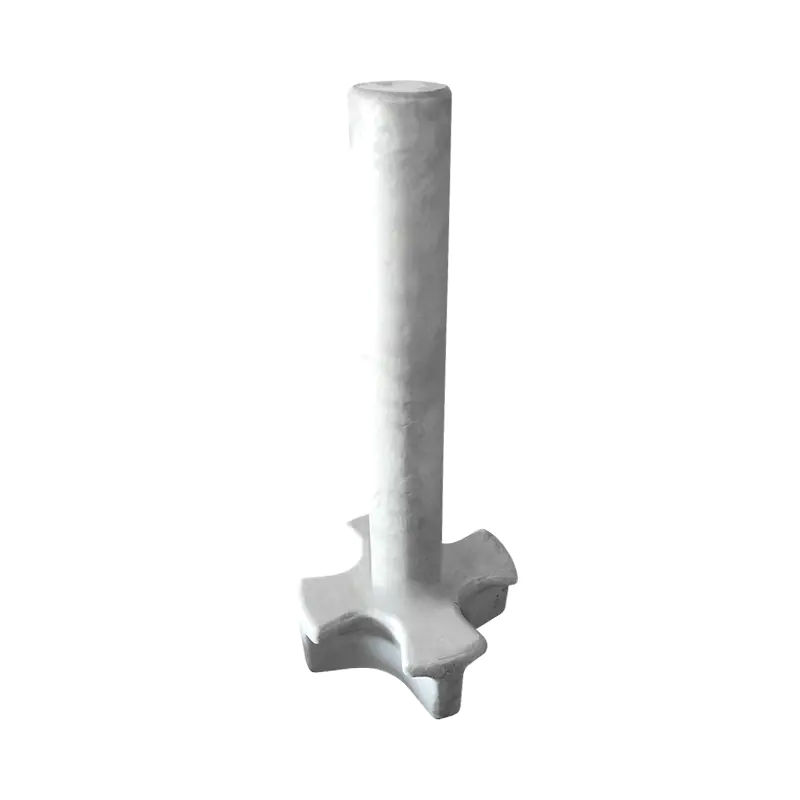 HP Heat-Resistant Steel Copper Alloy AgitatorPrecision-cast HP 26Cr-35Ni agitator for high-temperature copper and aluminium alloy mixing, built to resist oxidation, molten-metal corrosion and thermal stress.View Product →
Galvanizing lines add a third case. A sink roll in a zinc bath is not corroding in the electrochemical sense; it is being attacked by liquid metal and built up with dross. Buyers who specify it as a "corrosion-resistant casting" and stop there usually end up arguing about coating life eighteen months later.
What to Write Into the Purchase Order
Grade names alone do not protect a buyer. These clauses do, and they cost little to add:
- Chemical composition per heat, with the analysis reported against the specified grade rather than a generic stainless claim.
- Minimum PREN for stainless grades, stated as a number, plus a positive material identification check on 100% of finished pieces.
- Ferrite content range for duplex grades, measured on the finished casting, not on a test coupon from another heat.
- Intergranular corrosion testing per ASTM A262 Practice E for austenitic grades, or the relevant duplex test method where chloride service is expected.
- Radiography or ultrasonic inspection for castings above an agreed section thickness, with acceptance criteria referenced to a named standard.
- A weld repair procedure, welder qualification and a repair map, because an undocumented repair in a corrosion-critical zone is a future leak.
- Dimensional verification by 3D scanning where wall thickness tolerance affects flow, heat transfer or fit-up.
- Hydrostatic or leak testing for sleeves, jackets and any part separating two fluids.
A supplier with in-house spectrometers, metallographic analysis and dimensional scanning can close most of these points before shipment. A trader cannot, and the gap usually appears in year two rather than at goods-in inspection.
Cost, Lead Time and Three Procurement Traps
Alloy cost rises faster than weight suggests, because molybdenum, nickel and tungsten carry the price. The chart below is indicative only and will move with the alloy market, but the shape of the curve is stable: the step from CF3M to CD3MN is moderate, while the step to a nickel-based grade is steep enough that it should be justified by a specific failure mode.
Relative alloy cost index (CF3M = 1.0, indicative)
CF3M (316L cast) — index 1.0
CD3MN (2205 cast) — index 1.6
2.4879 (GNiCr28W) — index 3.2
Three traps recur in tender reviews. The first is comparing piece price instead of cost per service year, which quietly rewards the cheaper grade until the first replacement. The second is accepting a mill certificate from a different heat than the parts shipped. The third is treating lead time as a fixed number; corrosion-resistant grades with tight chemistry windows and duplex heat treatment cycles need realistic scheduling, and a compressed lead time is usually recovered by skipping a normalising step or a dimensional check.
A Selection Path You Can Apply on the Next Drawing
The decision tree below compresses the logic above into the order most engineers actually use it. Work from the environment down, and let the casting route confirm the answer rather than drive it.
- Is the service environment wet and chloride-bearing?
- Yes, under 200 ppm chloride and under 60 °C: CF3M, with machining on sealing surfaces
- If crevices or deposits are unavoidable, move up to CD3MN
- Yes, seawater or over 1,000 ppm chloride: CD3MN, ferrite 35–65% verified on the part
- Above 150 °C or with wet-dry cycling, review a higher Ni/Mo or nickel-based grade
- Is the environment dry, hot and sulphur- or carbon-bearing?
- 800–1,000 °C in oxidising gas: 1.4848 (GX40CrNiSi25-20)
- 1,000–1,150 °C with thermal cycling and load: 1.4852 (GX40NiCrSiNb35-26)
- Carburising, high sulphur or heavy deposit conditions: 2.4879 (GNiCr28W)
- Is the failure mode liquid metal attack rather than electrochemical corrosion?
- Specify coating system, surface preparation and straightness together with the base grade
Used in that order, the tree eliminates most wrong-grade quotations before they reach the comparison sheet, and it gives the foundry a clear basis for proposing a process route instead of simply matching a grade name.




 English
 Español
 عربى