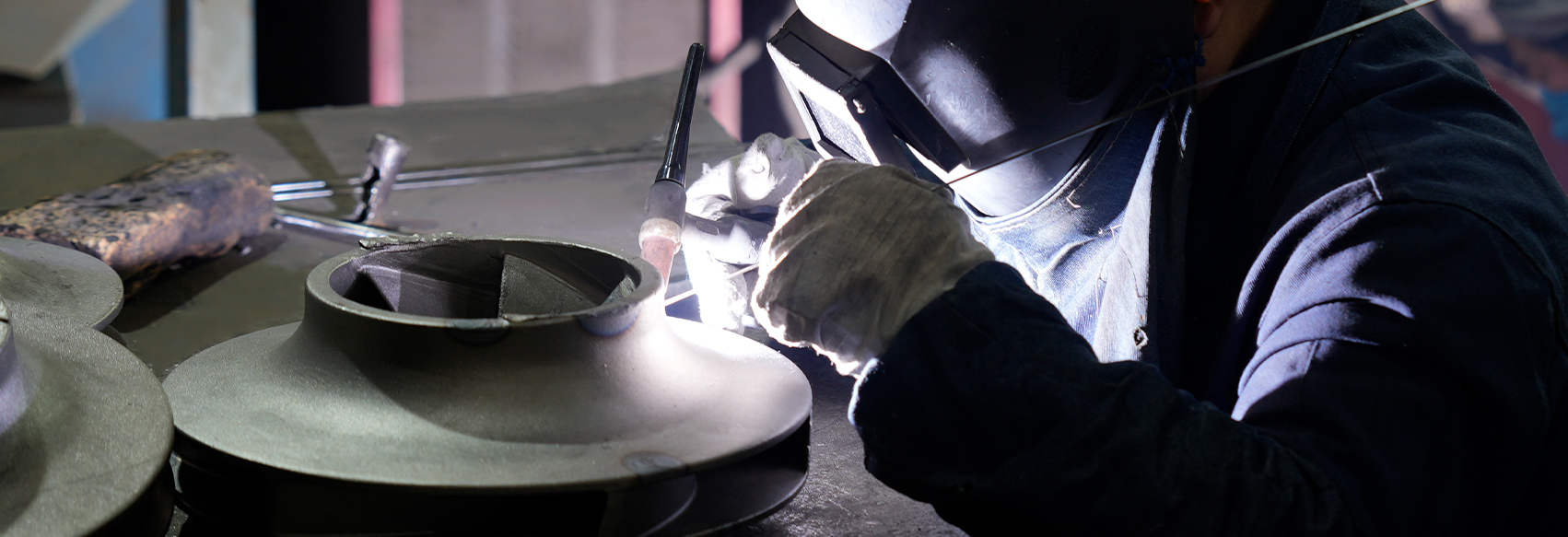
A radiant tube that bows 15 mm after eight months in a continuous carburizing furnace is rarely a furnace problem. In most failure reviews, the cause sits in the purchase specification: a grade picked for temperature but not for atmosphere, a wall that runs 1.5 mm thin on one side, or an inspection package that stopped at a chemical certificate.
The short version: match grade to atmosphere and mechanical load rather than to a single temperature figure; treat wall concentricity and bore soundness as mechanical requirements, not cosmetic ones; and buy from a foundry that can show chemistry, metallurgy and geometry data from the same heat number. The sections below explain why those three points decide whether a high alloy centrifugal casting lasts three years or ten months.
What Counts as a High Alloy Centrifugal Casting
High alloy generally means total alloying content above roughly 30%, with chromium doing the oxidation work and nickel, tungsten or niobium holding the structure together at temperature. A working foundry range usually covers heat-resistant austenitic grades such as 1.4848 (GX40CrNiSi25-20) and 1.4852 (GX40NiCrSiNb35-26), nickel-based 2.4879 (GNiCr28W), the HP family around 26Cr/35Ni, corrosion grades such as 316L (CF3M) and duplex 2205 (CD3MN), and wear grades such as GX280 (KMTBCr26).
Centrifugal casting is not a universal route for these melts. It produces bodies of revolution: tubes, rollers, sleeves, cylinders and liners, typically from about 50 mm to 1000 mm outside diameter and up to 4000 mm long, with walls from roughly 8 mm upward. Ask for a shape outside that envelope and the honest answer is a different process, usually sand or investment casting. The mechanics are covered in this overview of centrifugal casting principles, which is worth reading before you freeze a drawing.
Why the Process Suits High Alloy Melts
Molten high alloy is sluggish and loses fluidity quickly, which is exactly why spinning a mould works so well for it. Metal is poured into a rotating mould and thrown against the wall, so filling happens under centrifugal pressure rather than gravity alone. Oxide skins, slag and gas migrate to the bore, which is subsequently machined away, leaving a wall that is denser and cleaner than a static casting of the same section.
Two consequences matter commercially. First, no risers or feeders are needed, so yield typically runs 70-85% against 50-60% on a static sand job, which is significant when the melt is 60% nickel. Second, solidification runs directionally from the outside inward, producing a fine, radially oriented grain structure that resists thermal fatigue in cycling furnaces.
The trade-offs are just as real. Properties are not identical in every direction, so a tube loaded in cross-axis bending should be specified with that in mind. The bore is also only as sound as the machining allowance left for it, and a supplier who quotes zero allowance on the inside diameter is quoting a risk, not a saving.
Matching Grade to Duty
Grade selection usually goes wrong in one of two ways: buying more alloy than the duty needs, or buying a temperature rating without checking the atmosphere. Carburizing, oxidizing, sulfidizing and molten-metal environments attack different elements, so the same grade can be generous in one furnace and marginal in another.
Indicative grade map for high alloy centrifugal castings; real limits depend on load, atmosphere, thermal cycling and wall thickness.
| Grade |
Typical chemistry |
Indicative ceiling |
Where it earns its keep |
| 1.4848 (GX40CrNiSi25-20) |
25Cr / 20Ni / Si |
~1100 °C |
Trays, frames, furnace furniture, recuperator tubes |
| 1.4852 (GX40NiCrSiNb35-26) |
35Ni / 26Cr + Nb |
~1150 °C |
Furnace rollers and radiant tubes under load |
| 2.4879 (GNiCr28W) |
28Cr, Ni base + W |
~1200 °C |
High-stress rollers, radiant tubes, sulfur-bearing duty |
| HP 26Cr35Ni |
26Cr / 35Ni |
~1150 °C |
Tube assemblies, agitators, reformer components |
| 316L (CF3M) |
17Cr / 12Ni / Mo |
Corrosion-limited |
Anti-corrosion sleeves, sink rolls in milder media |
| 2205 (CD3MN) |
22Cr duplex |
Chloride service |
Corrosion-resistant sleeves and casings |
| GX280 (KMTBCr26) |
High-Cr white iron |
Wear-limited |
Mill liners, wear cylinders, mining casings |
2.4879 (GNiCr28W)1200 °C
1.4852 (Nb-stabilized)1150 °C
HP 26Cr35Ni1150 °C
1.4848 (25/20)1100 °C
316L (CF3M)850 °C
Bar chart: indicative maximum continuous service temperature in air, used as a first filter only.
Read the table as a filter, not a datasheet. A 1.4848 tray running at 1050 °C in air with light load often outlasts a higher-grade roller at 1120 °C under bending stress, because creep life falls steeply once a component passes about 60-70% of its practical ceiling. Where the duty involves thermal cycling, the deciding variable is usually section thickness and support spacing rather than the alloy nameplate.
Tolerances, Allowances and Inspection That Protect You
Most disputes on centrifugal castings are dimensional, not metallurgical, and they are avoidable by writing numbers into the purchase order instead of adjectives. A workable baseline for tube and roller work looks like this:
- Wall thickness: ±10% of nominal, or a stated minimum wall at the thinnest point, measured on both ends.
- Straightness: 1-1.5 mm per metre for rollers, with total runout agreed for long spans.
- Bore allowance: 3-6 mm per side depending on diameter, enough to remove the segregated inner layer cleanly.
- Concentricity: specified as TIR on the outside diameter after boring, not left to shop practice.
- Heat treatment: solution annealing temperature, holding time and cooling method recorded per heat.
- Non-destructive testing: dye penetrant on machined surfaces, ultrasonic or radiographic checks on heavy sections, hydrostatic test on corrosion sleeves.
- Documentation: heat number traceability, check analysis from the finished casting, metallography for carbide network or sigma phase, and a dimensional report.
Two purchase risks deserve specific attention. First, weld repair policy: a repaired radiant tube can perform perfectly, but only if the repair is documented, dressed out and re-inspected, so require disclosure rather than banning it outright. Second, chemistry on the certificate versus chemistry in the part: segregation during solidification can push carbon and carbide formers toward the bore, which is why a check analysis from the machined wall is worth insisting on.
Where These Castings Earn Their Keep
Heat treatment furnaces are the classic home for high alloy tubes and furniture: radiant tubes, hearth rollers, water-cooled rollers, trays, frames and fixtures that hold parts through carburizing, annealing or brazing cycles. The same components appear in steel reheating lines, where roller straightness directly affects strip tracking, and in galvanizing lines where sink rolls combine heat with molten zinc attack.
 1.4852 W-Type Centrifugal-Cast Radiant Tube for High-Temperature FurnacesCentrifugal-cast 1.4852 radiant tube for furnace service up to 1250°C, relevant to heat-treatment, reheating and galvanizing lines where high-alloy tubes and furniture are used.View Product →
Petrochemical and chemical service shifts the emphasis from temperature to corrosion: 316L and 2205 sleeves protect sensor and thermowell penetrations, while nickel-based castings handle hot gas paths where oxidation resistance decides turnaround intervals.
 2.4879 Heat-Resistant Furnace Roller for Roller Hearth FurnacesCentrifugal-cast 2.4879 roller for high-temperature roller hearth furnaces, with OD 203 mm and 1600 mm roller surface, suited to heat-resistant furnace roller applications.View Product →
Wear duty is the other half of the portfolio. High-chromium white iron cylinders and casings in grinding and mining circuits are chosen for hardness and carbide volume, and the centrifugal route pays off because the dense outer wall wears evenly rather than spalling in patches.
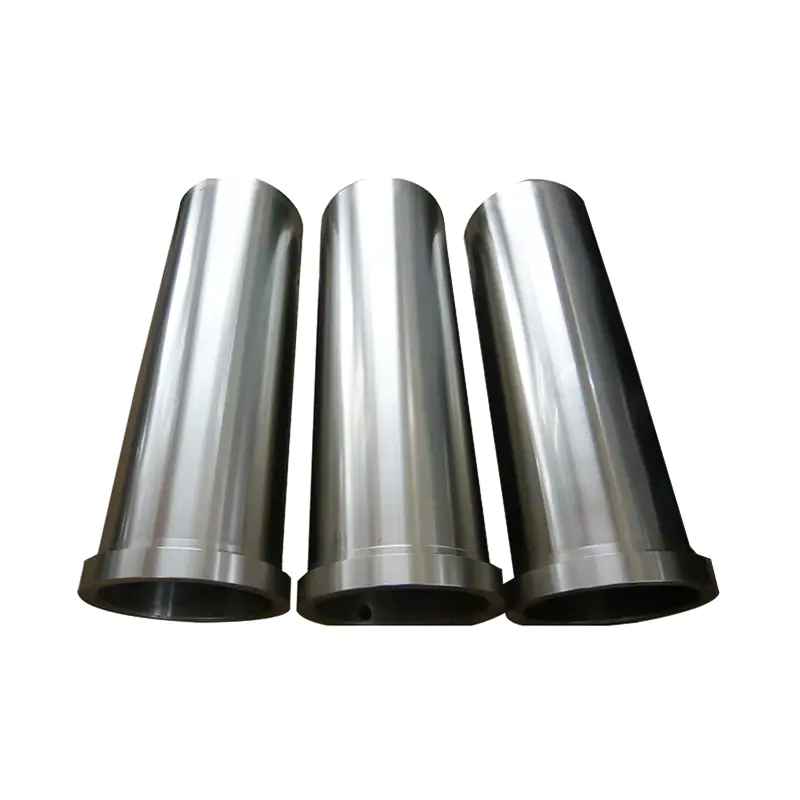 GX280 KMTBCr26 Wear-Resistant Centrifugal-Cast Inner CylinderWear-resistant GX280 (KMTBCr26) inner cylinder for mining machinery and powder grinding equipment, with HRC>60 hardness for high-load, strong-impact service.View Product →
Buyers sourcing furnace furniture for the heat treatment industry typically order mixed baskets of tubes, trays and rollers from one foundry, which is why process breadth, not a single grade, is often the deciding factor in supplier selection.
A Sourcing Checklist for Buyers
Before releasing a purchase order for high alloy centrifugal castings, get written answers to six questions:
- Which heat number will the parts come from, and will you supply check analysis from the finished wall rather than the ladle?
- What minimum wall will you guarantee at the thinnest point, and how is it measured?
- What machining allowance is included on the bore, and who machines it?
- What heat treatment is applied after casting, and is it recorded per batch?
- What is your weld repair and re-inspection policy, and will repairs be disclosed?
- Which non-destructive tests are standard, and which cost extra?
Price comparisons only make sense when those six answers are on the table, because two quotes for the same drawing can differ by 20% on wall allowance and inspection scope alone.
High alloy centrifugal castings are a specification product, not a catalogue product. The grade sets the ceiling, the process delivers density and yield, and the purchase specification decides whether that ceiling is ever reached in service. Get the atmosphere, load and wall tolerance onto the drawing, insist on data from the finished casting, and the same tube that failed in eight months can quietly run for a decade.




 English
 Español
 عربى