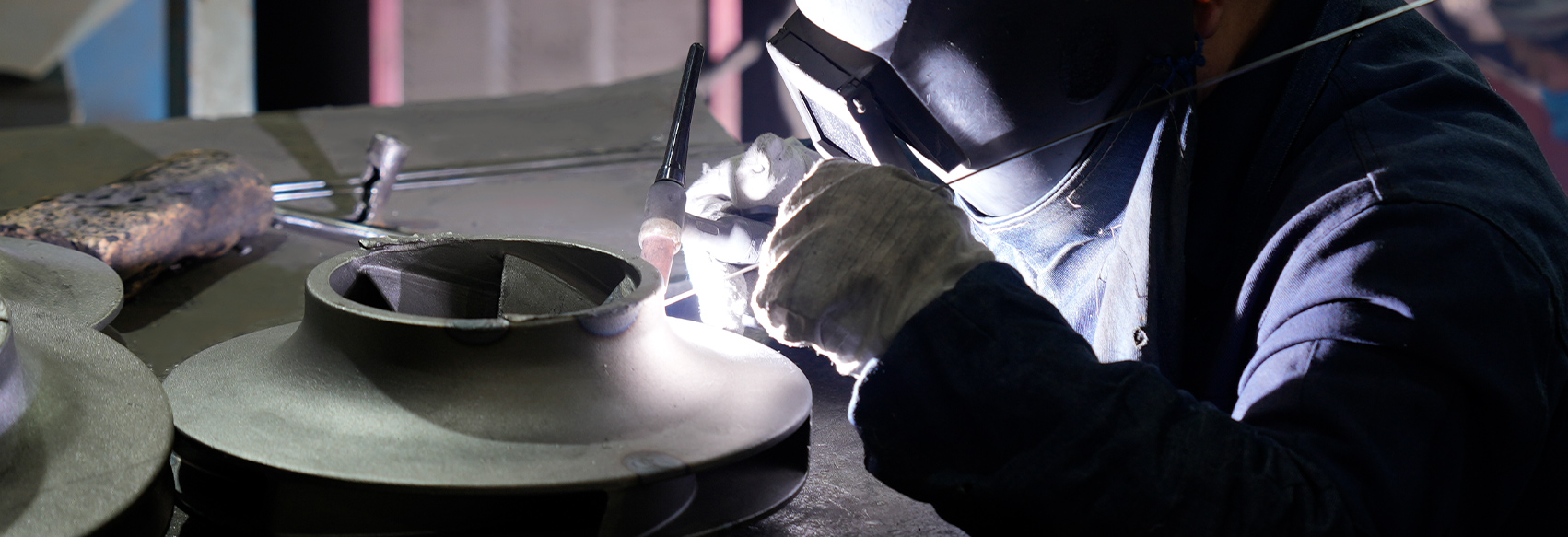
A chemical plant in Jiangsu replaced a batch of pump casings after eighteen months of service in a chloride-bearing process stream. The original parts had been ordered as "stainless steel," with no grade, no casting method, and no acceptance testing defined. Within months, pitting appeared along the flow path and crevice corrosion developed under the flange gaskets. The replacement order specified CD3MN duplex stainless steel, a defined casting process, and a chemical composition report on every heat. The unit price was higher. The planned service life was more than twice as long.
This is the practical meaning of corrosion-resistant castings. They are not a single product category. They are engineered components in which alloy composition, casting method, heat treatment, and inspection determine whether a part survives its environment or becomes a recurring maintenance cost.
Where Corrosion-Resistant Castings Matter Most
Corrosion-resistant castings earn their value in chemical processing, heat treatment, and steel production. In chemical plants, cast sleeves and pump wet-end components handle acids, chlorides, and caustic media. In heat treatment, fixtures and radiant tubes face both oxidizing furnace atmospheres and quenching environments. In steel mills, furnace rolls and radiant tubes operate at high temperature while exposed to process gases. In each case, the common thread is the same: a single failed component stops a line and costs far more than the component itself.
What Determines the Corrosion Resistance of a Casting
The corrosion resistance of a cast component comes from the alloy itself, not from a coating or surface treatment. Four elements do most of the work:
- Chromium forms the passive oxide film that gives stainless alloys their resistance in oxidizing media.
- Molybdenum improves resistance to pitting and crevice corrosion, especially in chloride environments.
- Nickel stabilizes the austenitic or duplex structure and improves resistance to reducing acids.
- Nitrogen strengthens duplex grades and raises their pitting resistance.
A casting can meet the nominal chemistry and still fail if its microstructure is wrong. Slow cooling, missing solution annealing, or precipitation of carbides, sigma phase, or excessive delta ferrite creates local areas where corrosion starts easily. For this reason, a corrosion-resistant casting is defined by both its composition and its metallurgical condition.
Common Corrosion Failure Modes in Cast Components
Before choosing a grade, it helps to identify which failure mode the part will face:
- Pitting corrosion: localized attack in chloride-bearing solutions; common on pump casings, impellers, and tube surfaces.
- Crevice corrosion: occurs under gaskets, scale, and overlapping surfaces where stagnant solution accumulates.
- Stress corrosion cracking: combines tensile stress with chlorides or caustic media; often appears as branching cracks with little visible metal loss.
- Intergranular corrosion: follows grain boundaries when chromium carbides form during welding or improper heat treatment.
- Erosion-corrosion: accelerated by abrasive particles or high flow velocity, common in slurry handling and valve trim.
- Galvanic corrosion: caused by coupling dissimilar metals in a conductive electrolyte without proper isolation.
In practice, many failures combine two or more of these mechanisms. That is why specifying a grade by name alone is not enough; the service environment and the manufacturing history both need to be defined.
Alloy Grades Commonly Used for Corrosion-Resistant Castings
The table below compares three grades that cover most industrial corrosion service. The first two are available as cast sleeves and wet-end components; the third is used where corrosion combines with high temperature.
Comparison of typical cast alloy grades for corrosion service; minimum mechanical values are based on common ASTM designations and should be verified with the foundry.
| Grade |
Structure |
Typical Corrosion Performance |
Typical Applications |
| 316L (CF3M) |
Austenitic |
Good general resistance in neutral and mildly aggressive media; limited in hot chlorides. |
Chemical sleeves, heat exchanger components, pump parts. |
| 2205 (CD3MN) |
Duplex |
Higher strength; excellent resistance to chloride pitting and stress corrosion cracking. |
Corrosion-resistant sleeves, wet-end pump parts, agitators. |
| HP-type 26Cr35Ni |
High-nickel austenitic |
Resists combined high-temperature oxidation and corrosive process gases. |
Furnace components, radiant tubes, heat treatment fixtures. |
For chloride service, the pitting resistance equivalent number (PREN) is a useful first filter. Standard 316L typically ranges around 24 to 26, while 2205 duplex typically reaches 34 to 35. Higher PREN usually means better resistance to pitting and crevice corrosion, but it does not replace a review of the actual media, temperature, and stress level.
How the Casting Process Affects Corrosion Performance
The same alloy can behave differently depending on how it is cast. Three processes cover most requirements:
Centrifugal Casting
Centrifugal casting is the preferred route for tubes and cylindrical components. During solidification, oxides and inclusions are pushed toward the inner bore, leaving a dense outer structure with fewer porosity defects. Foundries with centrifugal capability can produce high-alloy tubes from 50 mm to 1000 mm outside diameter and up to 4000 mm in length, which covers most radiant tubes, sleeves, and furnace rolls.
Investment Casting
Investment casting gives complex geometries, smooth surfaces, and tighter tolerances. The fine surface finish is a real advantage in corrosion service because rough surfaces provide sites for pitting to initiate. Impellers, valve bodies, and intricate pump parts are typical applications.
Resin Sand Casting
Resin sand casting is used for larger and heavier components where the geometry does not require the precision of investment casting. It is the most flexible route for big castings and moderate to high volumes, and it is often the most economical choice for large valve bodies, pump casings, and structural parts.
No casting process eliminates the need for sound feeding and gating. Shrinkage porosity, hot tears, and surface defects begin as casting problems, but they become corrosion problems because they trap solution and create crevices. Good foundry practice, process control, and inspection are what separate a corrosion-resistant casting from a casting that merely carries a corrosion-resistant name.
Quality Control Checks That Protect Your Order
Corrosion failures usually appear months or years after delivery, so inspecting the casting before shipment is the only practical protection. The following checks matter most:
- Chemical composition verification with a direct-reading spectrometer for each heat.
- Positive material identification using a handheld spectrometer on delivered parts.
- Metallographic examination to confirm the expected structure and detect sigma phase or carbide precipitation.
- Dimensional verification with 3D scanning for complex investment castings.
- Dye penetrant or other surface inspection on critical wetted surfaces.
A foundry that can provide these records as part of the delivery gives you more than parts; it gives you traceability when a new line is commissioned or a warranty issue has to be analyzed.
Practical Considerations When Ordering
To get a casting that performs, define the following before you send an inquiry:
- The service media, including chemical composition, chlorides, pH, and solid content.
- Operating temperature, pressure, and flow velocity, including startup and shutdown conditions.
- The required alloy grade and the applicable standard, such as ASTM A351 for CF3M or ASTM A890 for CD3MN.
- The casting process suitable for the geometry and quantity.
- Heat treatment and testing requirements, including solution annealing, mechanical tests, and inspection reports.
- Machining allowance and surface finish requirements for wetted surfaces.
Price is only part of the decision. A marginally cheaper casting that fails in eighteen months costs more in maintenance, lost production, and safety exposure than a correctly specified casting that runs for years. Suppliers with integrated casting, heat treatment, and machining capability reduce the number of interfaces you have to manage, and they can take responsibility for the finished component rather than just the rough casting.
Corrosion-resistant castings work when the alloy, the casting process, and the inspection all match the real service conditions. Start with the environment, confirm the grade and structure, and require documented quality control from the foundry. The parts that last longest are rarely the cheapest to buy; they are the ones whose failure modes were thought through before the mold was closed.




 English
 Español
 عربى
عربى