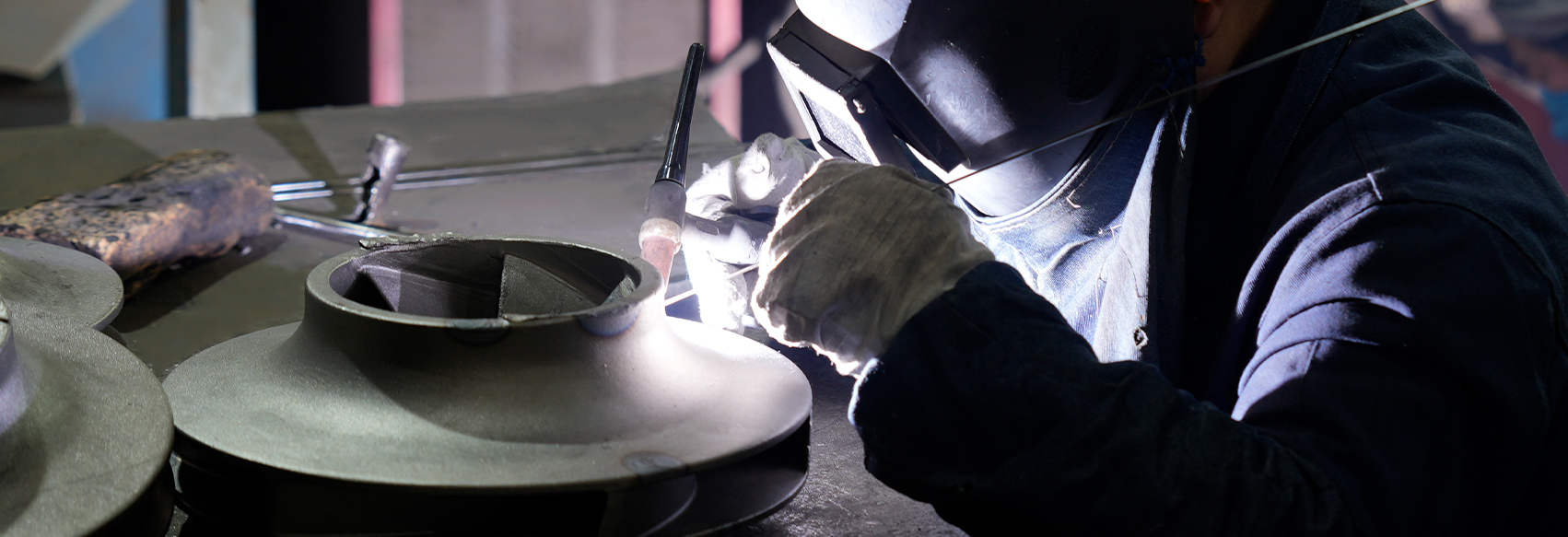
A chemical plant replaces 316L pump sleeves every eight months. A second plant runs what looks like the same sleeve for six years. Both carry the same alloy designation on the mill certificate. The difference sits in the casting route, the way the metal solidified, and what was inspected before the parts were packed for shipping.
Three variables decide how long a stainless steel casting lasts: the grade family, the casting process, and the acceptance criteria written into the order. Get all three right and the part behaves the way the grade datasheet promises. Miss one and the failure appears in the field, where correction costs a multiple of the casting itself.
The sequence below is deliberate: failure mode first, process second, grade third, paperwork last.
Start With the Failure Mode, Not the Drawing Temperature
Name the mechanism that will retire the part. A furnace roller at 1,050 °C is not corroding; it is oxidizing, creeping and thermal-fatigue cracking as the burners cycle. A galvanizing line sink roller is dissolving in molten zinc. A mining casing is being abraded by ore. No single alloy is strong on all three fronts, so the grade list narrows the moment the mechanism is named.
Table 1: Failure modes in stainless steel castings and the specification items that control each one.
| Failure mode |
What drives resistance |
Typical grades |
What the specification must state |
| Oxidation and creep above 900 °C |
Chromium and nickel content, niobium or tungsten stabilization, section thickness |
1.4848 (GX40CrNiSi25-20), 1.4852 (GX40NiCrSiNb35-26), HP 26Cr35Ni, 2.4879 (GNiCr28W) |
Grade, service temperature, furnace atmosphere, mechanical load, minimum wall thickness |
| Localized corrosion in chlorides and acids |
Molybdenum and nitrogen, low carbon, ferrite and austenite balance |
2205 (CD3MN), 316L (CF3M) |
Corrosion test method and acceptance level; phase ratio for duplex grades |
| Abrasion and erosion |
Carbide volume and morphology, bulk hardness |
440C, GX280 (KMTBCr26) |
Hardness value measured at an agreed depth below the surface |
| Thermal cycling |
Ductility, low carbide networking at grain boundaries |
1.4852, 2.4879, HP 26Cr35Ni |
Cycle count, heating and cooling rates, repair welding policy |
A grade name is a chemistry box, not a quality guarantee. GX40CrNiSi25-20 fixes ranges for chromium, nickel, silicon and carbon; it says nothing about grain size, grain-boundary carbides or internal porosity. Two foundries can both ship "1.4848" and deliver parts with very different service lives.
Published oxidation ceilings give a rough ranking, worth keeping in mind whenever a drawing quotes a temperature without a load:
1.48481050 °C
HP 26Cr35Ni1100 °C
1.48521150 °C
2.48791200 °C
The scale starts at 900 °C. These are indicative continuous-service ceilings taken from grade literature, and they shift down once the part carries load, sits in a sulphur-bearing atmosphere or cycles several times an hour. A heavily loaded tray that survives 1,050 °C in a steady furnace can fail quickly on a cycle that repeats every twenty minutes.
The Casting Route Decides Soundness More Than the Grade Does
Stainless steel casting is not one process. Three routes dominate, and each has a geometry it handles well and a geometry it fights.
- Investment (lost-wax) casting coats wax patterns in ceramic, burns the wax out and fills the cavity with metal. It suits thin walls, fine detail and internal cavities, and delivers the tightest as-cast tolerances of the three. Part size is the limit, because shell cost climbs with volume.
- Centrifugal casting pours metal into a rotating mould, so centrifugal force presses the wall outward while gas and slag migrate to the bore and are machined away. The wall is dense and low in porosity, which is why centrifugal casting is the standard route for furnace rollers, radiant tubes and corrosion-resistant sleeves. Diameters from 50 mm to 1,000 mm and lengths up to 4,000 mm cover most furnace and process-line components.
- Resin sand moulding handles the heavy, non-symmetric pieces: deep flanges, bosses and thick sections that no spinning machine can produce. Tolerances are coarser, so plan a larger machining allowance and expect more dimensional variation between batches.
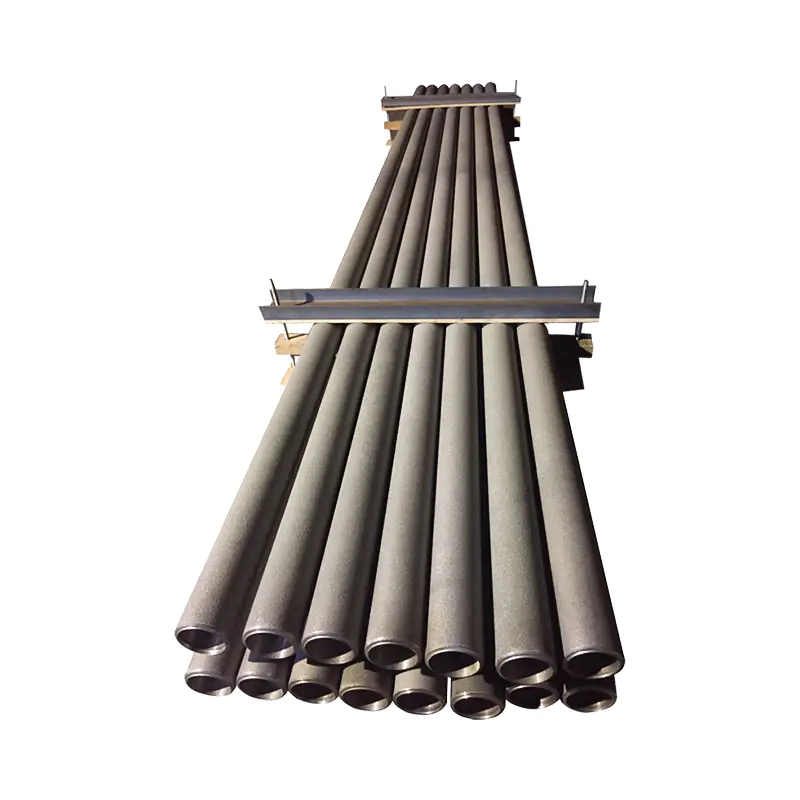 1.4852 Centrifugal Cast Heat-Resistant Radiant TubeCentrifugal-cast 1.4852 radiant tube for heating furnaces; compare its geometry and heat-resistant pipe construction when selecting a casting route.View Product →
Use the geometry to pick the route before the grade is even discussed:
- Is the finished part a tube, sleeve or roller with a rotational shape?
- Yes, and it must resist heat or corrosion: centrifugal casting. Sound wall, low porosity, wide size envelope.
- No: continue below.
- Does the part have thin walls, fine detail or internal cavities?
- Yes: investment casting. Best surface finish and tolerance, size limited by shell and pattern cost.
- No: resin sand moulding. Heavy or flanged parts, with a larger allowance planned in.
The order matters. A perfect 2.4879 chemistry poured into a static mould and left with gas porosity under a flange fails faster than a less exotic grade that was centrifugally cast sound.
Heat Treatment and Machining: the Cost Lines Buyers Forget
Castings normally ship as-cast, solution annealed, or solution annealed plus rough machined. Choosing the wrong condition shifts both cost and risk.
- Duplex grades such as 2205 (CD3MN) need the correct cooling path after solution annealing to keep the ferrite and austenite balance near 50/50. Slow cooling through 600–950 °C precipitates sigma phase, and a sleeve that leaves the works at an unbalanced ratio tends to crack rather than deform.
- Austenitic heat-resistant grades harden by precipitation over thousands of hours at temperature, not in a quench. Their room-temperature ductility is what allows handling and field fitting, so agree any quenching and re-annealing steps with the foundry in writing.
- Machining allowance is not a blanket number. Add it on top of the minimum wall, not the nominal wall. A 3 mm allowance taken from a nominal 12 mm wall leaves 9 mm; the same allowance taken from a 10 mm minimum takes the part below design.
- Write a repair welding policy. Uncontrolled local repairs on a heat-resistant casting create a hard, crack-prone zone exactly where the thermal gradient is worst.
Five Acceptance Checks Worth Paying For
Inspection is where the specification stops being a document and starts being a casting. These five checks catch the majority of defects that would otherwise appear in service.
Table 2: Five acceptance checks that catch most defective stainless steel castings before shipment.
| Check |
Method |
What it catches |
Cost of skipping it |
| Chemical composition |
Optical emission spectrometry, bench or handheld |
Off-grade heats, substituted or diluted alloy |
Rapid oxidation or corrosion failure with no visible cause |
| Microstructure |
Metallographic section |
Grain-boundary carbide networks, sigma phase in duplex, wrong phase ratio |
Brittle cracking within the first thermal cycles |
| Internal soundness |
Radiography or ultrasonic testing on agreed zones |
Shrinkage, gas porosity, hot tears |
Leak paths in sleeves and tubes after machining |
| Dimensions and wall thickness |
3D scanning or CMM against the model |
Thin walls, ovality, straightness drift |
Field fit-up failures and local hot spots |
| Surface hardness (wear parts) |
Portable hardness tester at an agreed depth |
Soft skin over a hardened core, or the reverse |
Wear life at half of the design estimate |
Ask which checks are performed in-house. A foundry running its own spectrometer, metallographic bench and dimensional scanning keeps those checks inside the process flow, which is faster and usually cheaper than third-party sampling after the fact.
What a Workable Stainless Steel Casting RFQ Contains
Most disputes trace back to an RFQ that left something implicit. A quotation-ready enquiry states:
- Grade and the standard behind it, for example EN or ASTM designation, not just a trade name.
- Required process route, if the geometry or service life makes it non-negotiable.
- Drawing revision, datum faces and the minimum wall thickness.
- Machining allowance and which surfaces stay as-cast.
- Heat treatment condition and any post-casting operation.
- Non-destructive testing level, zones and acceptance criteria.
- Test certificate type, heat number traceability on the part itself, and the repair welding policy.
- Quantity, pattern ownership and the deadline for first-article approval.
The single most common omission is the minimum wall. Buyers routinely send a nominal dimension, and the foundry then optimises for yield rather than for the thinnest section that must survive a decade of thermal cycling.
Matching Grade and Route to the Industry
Heat treatment equipment is the classic application for heat-resistant grades: trays, frames, charge material frames, gear racks and recuperators in 1.4848, radiant tubes and furnace rollers in 1.4852 or 2.4879, and screw conveyors in 2.4879 where abrasion accompanies the heat. The heat treatment industry buys these as consumable fixtures, which puts the emphasis on repeatable wall thickness and consistent heat-to-heat chemistry rather than on a single hero part.
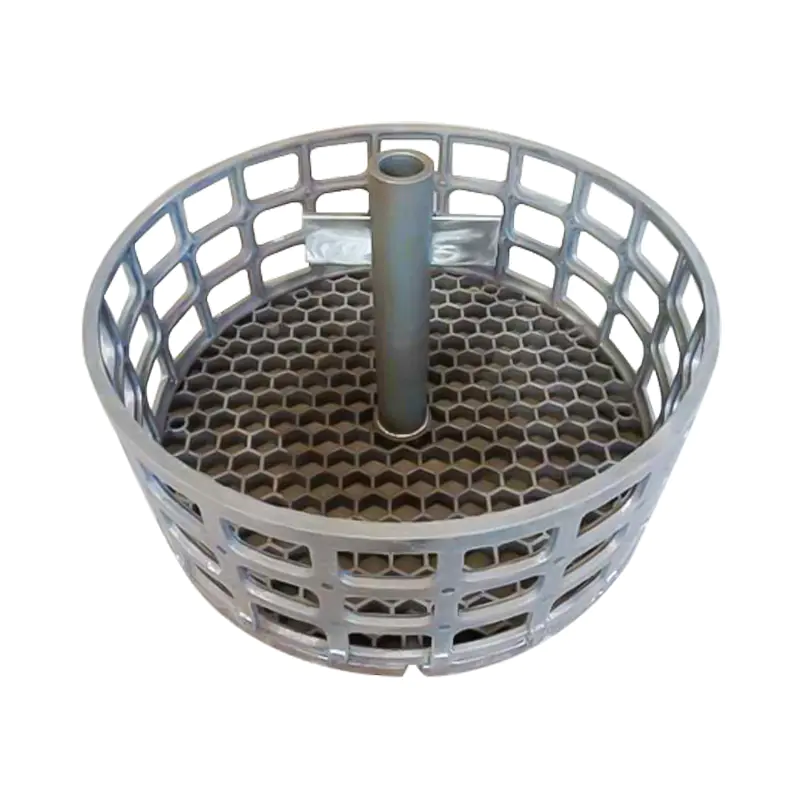 1.4848 Heat Treatment Frame for High-Temperature Furnace LoadsPrecision-cast 1.4848 frame for loading workpieces in heat treatment furnaces, where repeatable wall thickness and heat-to-heat chemistry support reusable fixtures.View Product →
Chemical and petrochemical plants need the opposite bias. Corrosion-resistant sleeves in 2205 (CD3MN) and 316L (CF3M) protect shafts in chloride and acid environments, while HP 26Cr35Ni copper alloy agitators serve mixing duties at temperature. Here the acceptance criteria should hinge on corrosion testing and phase balance, and the casting route should favour a dense wall over a tight tolerance.
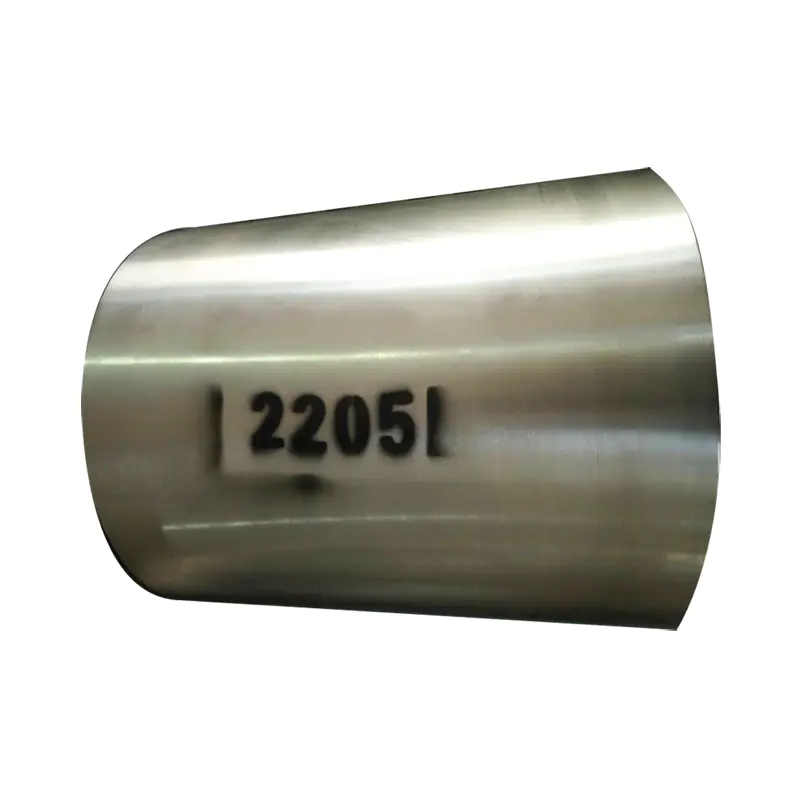 2205 CD3MN Centrifugal-Cast Corrosion-Resistant Pump SleeveCentrifugal-cast 2205 (CD3MN) sleeve for water pump and impeller shafts in chloride or acid service, where dense walls and corrosion testing matter.View Product →
Steel and galvanizing lines use furnace hearth rollers, W-type radiant tubes and 316L sink rollers, where straightness and bore concentricity matter as much as chemistry. Mining and grinding circuits sit at the other extreme: 440C grinding inner cylinders and GX280 (KMTBCr26) wear liners and casings are chosen for carbide content and hardness depth, and a two-point hardness specification rarely captures what the wear surface actually needs.
Stainless steel casting rewards buyers who specify in the right order. Name the failure mode, then lock the process route, then let the grade follow from the chemistry that mechanism demands. Add the five inspection checks and a written repair welding policy, and the eight-month sleeve becomes the six-year sleeve, made to the same drawing and the same alloy designation.




 English
 Español
 عربى