When a heat-treatment plant replaces a batch furnace with a continuous line, the first parts to fail are often the radiant tubes or furnace rollers. The reason is rarely the alloy grade alone. High alloy centrifugal castings fail early when wall thickness varies, when spin speed is inconsistent, or when the cast structure is not inspected before machining. If you are buying these parts, treat the purchase as a specification and verification problem, not a catalog-number problem.
This guide explains what high alloy centrifugal castings are, how to compare grades such as 1.4848, 1.4852, 2.4879, 316L, 2205, 440C, and GX280 KMTBCr26, and what to check before placing an order. The practical goal is simple: match the casting to the furnace atmosphere, wear pattern, or corrosive medium, then confirm the supplier can hold the dimensions and structure you paid for.
What Makes High Alloy Centrifugal Castings Different
Centrifugal casting pours molten metal into a rotating mold. Centrifugal force pushes the metal outward, so the outer wall forms first and solidifies under pressure. This is why the process suits cylindrical or symmetrical parts: tubes, rollers, sleeves, cylinders, and rings. For high alloy grades, the benefit is not just shape. The process can produce a dense wall with fewer shrinkage pores than a static sand casting of the same section, and it does not rely on discrete risers or feed points to avoid trapped porosity.
High alloy means the material contains enough chromium, nickel, silicon, or other elements to survive heat, wear, or corrosion. A plain carbon steel roller may cost less, but it will scale, warp, or wear through in a furnace. A high alloy centrifugal casting is specified when the part must keep its shape and surface at temperature, or when a corrosive or abrasive medium would destroy a lower-grade tube.
The trade-off is that centrifugal casting is not a universal replacement for sand or investment casting. It is best for round, hollow, or symmetrical parts. Complex brackets, thin fins, and tight internal cavities usually go to investment casting or sand molding. A buyer should first confirm the part geometry fits the process, then compare alloy and inspection requirements.
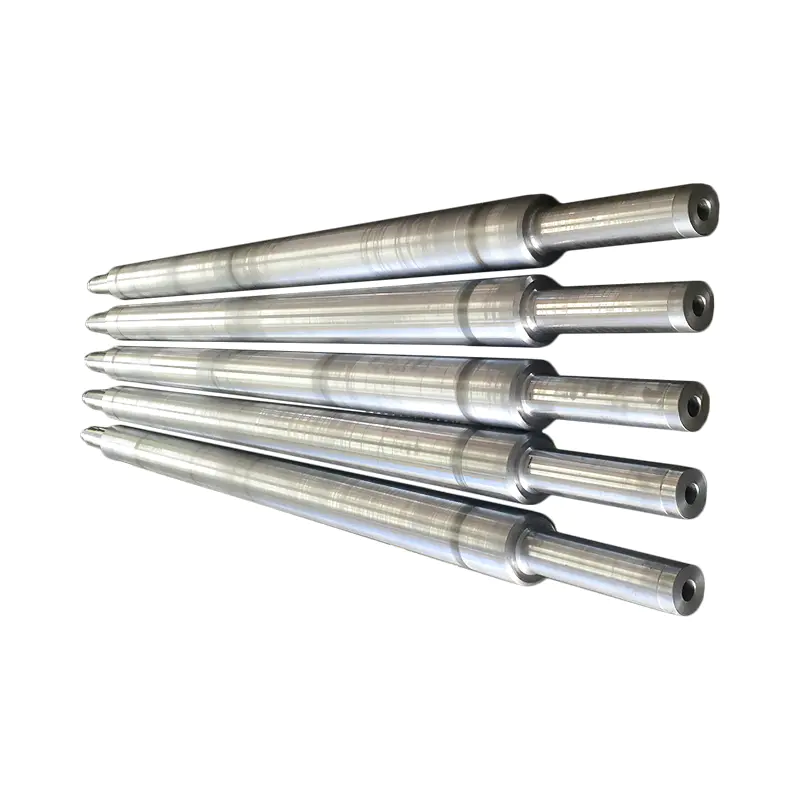 Custom Centrifugal-Cast Heat-Resistant Steel Pipe RangeBrowse custom centrifugal-cast heat-resistant pipes and rollers, including 1.4848, 1.4852, and 2.4879 variants, then compare alloy and inspection needs.View Product →
Typical heat-resistant centrifugal products include radiant tubes, furnace rollers, water-cooled rollers, and W-type radiant tubes. Wear-resistant versions include high-hardness grinding cylinders and mining machinery casings. Corrosion-resistant versions include 2205 and 316L sleeves for chemical and galvanizing lines.
Matching Alloy Grades to Heat, Wear, and Corrosion
The alloy grade is the starting point, but the operating condition decides the final choice. A furnace roller in a continuous line sees a different load from a batch furnace tray. A sleeve in a chemical line sees a different attack from a mining casing. Use the following comparison as a shortlist, not a final specification.
Table 1: Common high alloy centrifugal casting grades and their typical service focus. Final selection depends on temperature, atmosphere, load, and corrosion medium.
| Grade |
Key alloy character |
Typical service focus |
Example parts |
| 1.4848 (GX40CrNiSi25-20) |
High Cr and Ni, heat resistant |
High-temperature furnace supports |
Bottom feed tray, continuous furnace trays, heat-treatment frames |
| 1.4852 (GX40NiCrSiNb35-26) |
Nb-stabilized, heat resistant |
Furnace rollers and radiant tubes |
Furnace hearth roller, radiant tube, W-type radiant tube |
| 2.4879 (GNiCr28W) |
Ni-Cr-W, severe thermal cycling |
High-temperature conveying and heating |
Screw conveyor, furnace roller, heating radiant tube |
| HP type 26Cr35Ni |
High Ni and Cr, copper alloy variant |
Chemical and high-temperature mixing |
Agitator |
| 316L (CF3M) |
Mo-bearing austenitic stainless |
Corrosion resistance |
Long-lasting anti-corrosion sleeve, galvanized line sink roller |
| 2205 (CD3MN) |
Duplex stainless |
Corrosion and chloride service |
Corrosion-resistant sleeve |
| 440C |
High carbon, high hardness |
Abrasive wear |
High-hardness grinding inner cylinder |
| GX280 (KMTBCr26) |
High Cr white iron |
Severe abrasion |
Mining machinery casing, wear-resistant inner cylinder |
Two mistakes are common. First, choosing a higher grade than the application needs. That adds cost without improving service if the failure mode is actually mechanical overload or poor fit. Second, copying a grade from a different furnace or line. Small changes in atmosphere, sulfur, chloride, or thermal cycling can move the correct choice from one family to another. A supplier that can show chemical analysis and metallographic structure is more useful than one that only lists a grade name.
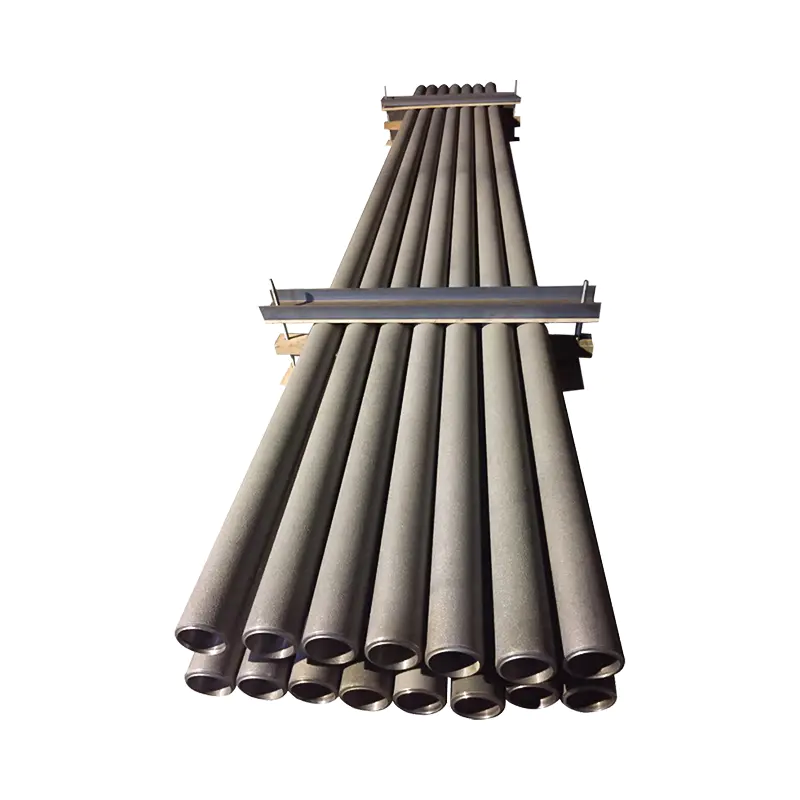 1.4852 GX40NiCrSiNb35-26 Centrifugal-Cast Radiant Tube for Furnace HeatingView this heat-resistant radiant tube for furnace heating, with 900°C service, φ50–φ1200 size range, and specified 24–27% Cr / 33–36% Ni chemistry.View Product →
For example, 1.4852 radiant tubes are often specified where the tube must resist oxidation and maintain creep strength. If the tube also sees heavy abrasion from a moving burden, a wear-resistant grade may be needed instead. If the tube sees chlorides or acids, a 316L or 2205 sleeve may be the better fit.
Centrifugal Casting vs. Sand and Investment Casting
Process choice affects wall thickness tolerance, surface finish, tooling cost, and how many parts you can order. The table below gives a practical comparison for high alloy parts. It is written for procurement discussions, not for a textbook.
Table 2: Process comparison for high alloy industrial castings. Centrifugal casting wins on cylindrical density and size range, but it is not the best route for every geometry.
| Process |
Best shapes |
Typical wall and size |
Relative tooling cost |
Relative piece cost |
Key risk |
| Centrifugal casting |
Tubes, rollers, sleeves, rings |
Diameter 50-1,000 mm, length up to 4,000 mm |
Medium |
Medium to high |
Spin speed and wall uniformity |
| Resin sand casting |
Large frames, trays, casings |
Large and heavy sections |
Low to medium |
Low to medium |
Porosity and surface cleanup |
| Investment casting |
Complex, thin-wall, precise parts |
Small to medium, high detail |
High |
High |
Size limit and cost |
If the part is a straight or stepped tube, centrifugal casting usually gives a better internal structure and less machining allowance than sand casting. If the part is a large rectangular frame, resin sand molding is often more practical. If the part has fine internal passages or a complex outer profile, investment casting may be the only route. The buying question is not which process is best in general, but which process matches the drawing and the failure mode.
For furnace components, the heat treatment industry often needs a mix of process routes. A radiant tube may be centrifugal cast, while a fixture or tray may be sand cast. A supplier that controls more than one process can reduce the number of vendors and keep tolerances consistent across the assembly.
Specification and Inspection Checklist for Buyers
Before you approve a purchase order for high alloy centrifugal castings, put the following points in writing. These are the details that decide whether the part fits, lasts, and can be traced if something goes wrong.
- Drawing revision and alloy grade. Confirm the exact grade, including any suffix such as GX40CrNiSi25-20 or CF3M. Do not accept a generic "heat-resistant steel" description.
- Chemical composition. Ask for a direct-reading spectrometer result or a certified mill test report for the heat. Check carbon, chromium, nickel, silicon, and any stabilizing elements against the standard.
- Wall thickness and concentricity. For tubes and rollers, specify minimum wall, maximum wall, and allowed eccentricity. A visually round tube can still be too far out of balance to machine cleanly.
- Length and straightness. Confirm overall length, end preparation, and straightness tolerance. Long rollers may need stress relief before final machining.
- Metallographic structure. For high-temperature service, ask for a metallographic examination to confirm the cast structure and check for excessive porosity or inclusions.
- Non-destructive testing. Agree on dye penetrant, ultrasonic, or radiographic inspection where the part is critical. State the acceptance level, not just the method.
- Machining and heat treatment. Confirm whether the supplier machines the part or supplies a rough casting. If heat treatment is required, ask for the cycle and hardness result.
- Marking and traceability. Require heat number, grade, and purchase order reference on the part or on a durable tag. This matters when several alloys look similar after blasting.
- Packing and shipping. For long tubes and rollers, specify end protection, support spacing, and moisture protection. A good casting can be damaged by poor blocking.
A supplier with in-house finishing equipment can often hold these requirements better than a trading company. It can control the transition from casting to heat treatment to machining without shipping the part between multiple shops. That reduces the chance that dimensions move after the final inspection.
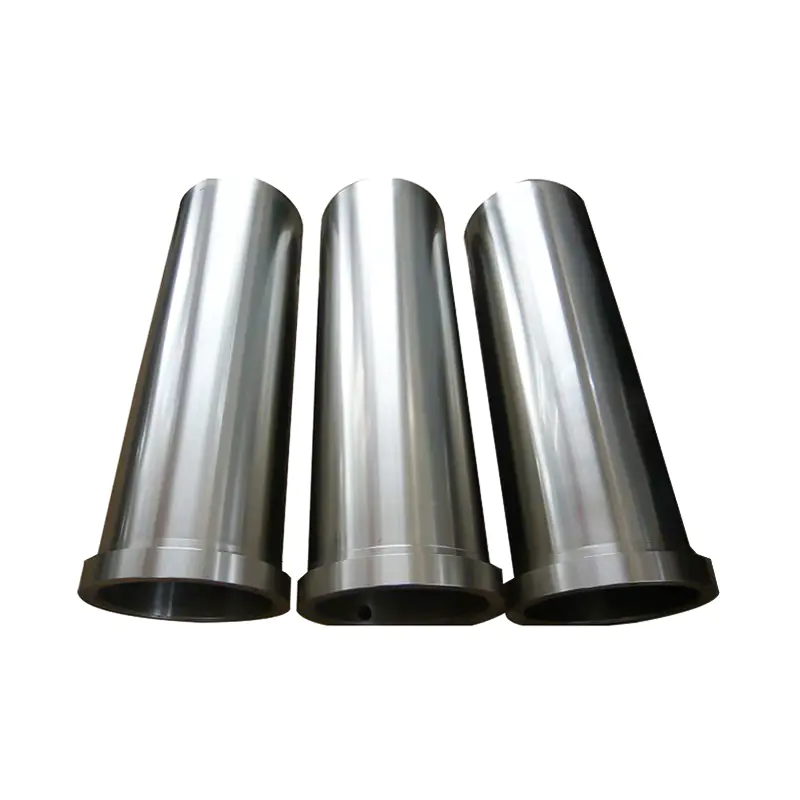 GX280 KMTBCr26 Wear-Resistant Inner Cylinder for Mining EquipmentView this quenched centrifugal-cast inner barrel for high-load mining and powder grinding, with HRC over 60 and stable performance under impact and wear.View Product →
For wear-resistant parts such as GX280 KMTBCr26 inner cylinders, the same logic applies. Hardness and microstructure determine wear life, so the inspection plan should include hardness testing and a check for casting defects. A low price per kilogram is meaningless if the part fails in weeks.
Where High Alloy Centrifugal Castings Earn Their Cost
High alloy centrifugal castings are usually a small part of a plant's capital budget but a large part of its maintenance cost. They earn their cost when they reduce unplanned downtime, hold dimensional stability, and survive the specific attack in the process. The tree below shows the main application routes for these castings.
- Heat treatment
- Radiant tubes and W-type radiant tubes
- Furnace rollers, hearth rollers, and water-cooled rollers
- Trays, frames, charge material frames, and gear racks
- Chemical processing
- Corrosion-resistant sleeves in 2205 and 316L
- High-temperature agitators
- Steel and metallurgy
- Furnace hearth rollers and heating furnace rollers
- Radiant tubes for reheating and heat treatment lines
- Other industrial lines
- Galvanized line sink rollers
- Waste incineration grate parts
- Wear-resistant inner cylinders and mining machinery casings
In each case, the buying decision should start from the failure mode. If the old part cracked, check thermal cycling and support design. If it scaled away, check atmosphere and alloy. If it wore thin, check abrasion and hardness. If it corroded, check chemistry and chloride level. The replacement casting should address that mode, not simply match the old drawing.
For buyers who want a technical starting point, the basic principles and process characteristics of centrifugal casting explain how rotation speed, mold temperature, and pouring rate affect the final wall. Those variables are often more important than the alloy name when a part fails early.
How to Evaluate a High Alloy Centrifugal Casting Supplier
A supplier's process range and inspection equipment tell you what it can control. For high alloy centrifugal castings, look for three capabilities. First, can the supplier cast the required diameter and length? A range of 50 mm to 1,000 mm in diameter and up to 4,000 mm in length covers many furnace rollers and radiant tubes. Second, can it control chemistry and structure? Direct-reading spectrometry, handheld spectrometry, metallography, and 3D scanning are practical tools for this work. Third, can it finish the part? Heat treatment furnaces and machining equipment reduce the risk of handling damage and tolerance loss between shops.
Production capacity also matters for lead time. An annual casting capacity of several thousand tons is not a guarantee of quality, but it does show the supplier can handle repeat orders and larger campaigns. For export buyers, language support and experience with international packing standards are useful. Ask for sample inspection records from a similar grade and shape, not just a general brochure.
High alloy centrifugal castings are not a commodity. The same nominal grade can perform very differently depending on spin speed, wall uniformity, heat treatment, and inspection. Start with the failure mode, choose the process that fits the geometry, select the alloy for the actual environment, and write the inspection requirements into the order. That approach will not make the casting cheap, but it will make the purchase predictable. If you need to compare a radiant tube, furnace roller, corrosion-resistant sleeve, or wear-resistant cylinder, ask for the grade, the test report, and the machining tolerance before you compare price.




 English
 Español
 عربى
عربى