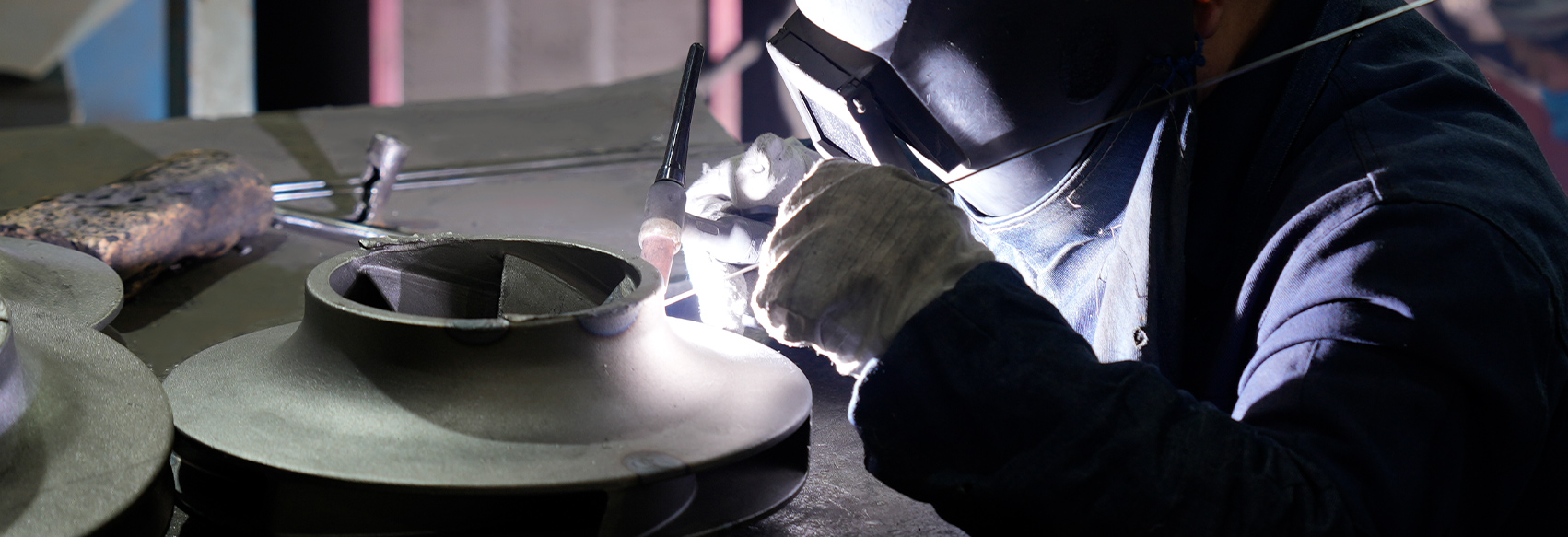
Why Wear-Resistant Steel Pipe Fails in Industrial Service
A pneumatic conveying line handling pulverized coal can lose measurable wall thickness in less than one operating year if the pipe grade is not matched to the abrasive duty. Slurry transport, ash handling, and grinding circuits behave the same way. Wear-resistant steel pipe exists to slow this damage, but no single grade resists every form of wear. You need to understand how the pipe actually fails before you can choose the right product.
Three wear mechanisms dominate industrial applications:
- Abrasive erosion. Fine particles moving at high velocity strike the pipe wall at a shallow or direct angle. Each impact removes a small amount of metal, and the combined effect produces gradual, widespread thinning. This is the typical mechanism in pneumatic conveying lines, pulverized fuel piping, and cyclone transfer systems.
- Sliding wear. Coarser material moves along the bottom of the pipe under gravity or slow flow. The bed of particles grinds against the surface, and the damage appears as a polished groove along the invert of horizontal runs and elbows.
- Impact wear. Large or heavy particles hit the wall with high energy. Instead of polishing the surface, they chip and deform it, and they can crack hard materials. Impact-dominated service demands adequate toughness rather than maximum hardness.
Few installations suffer from only one mechanism. Ash from coal combustion, sinter dust from steel plants, and mined ore can combine all three forms of attack. Elevated temperature complicates the picture by softening the pipe wall, while a corrosive medium accelerates metal loss by continuously stripping away the protective oxide layer. When wear, heat, and corrosion act together, the material choice becomes a compromise, not a simple hardness decision.
The practical conclusion is straightforward: identify the dominant failure mode before specifying anything. A hard grade selected for an impact-dominated line may crack prematurely, while a tough but soft grade in an abrasive erosion line will lose wall thickness quickly. Define the mechanism first, then match the material.
Key Material Grades for Wear-Resistant Steel Pipe
For severe abrasive service, the decision usually comes down to two high-performance families: high-chromium white cast iron such as KMTBCr26 (GX280) and martensitic stainless steel such as 440C. Two more stainless families, duplex 2205 (CD3MN) and austenitic 316L (CF3M), serve corrosion-dominated duties.
GX280 (KMTBCr26): High-Chromium White Cast Iron
KMTBCr26 belongs to the high-chromium white cast iron family. Its microstructure contains a high volume fraction of hard chromium carbides, and those carbides are the real source of wear resistance. Typical hardness values are reported around 58 to 62 HRC, depending on heat treatment and section thickness. This grade performs well in abrasive erosion and sliding wear, which is why it appears in mining, grinding, and material handling equipment. We produce it as GX280 KMTBCr26 wear-resistant inner cylinders. It is not the right choice for severe impact loads or strongly corrosive media, where cracking or chemical attack will appear before wear does.
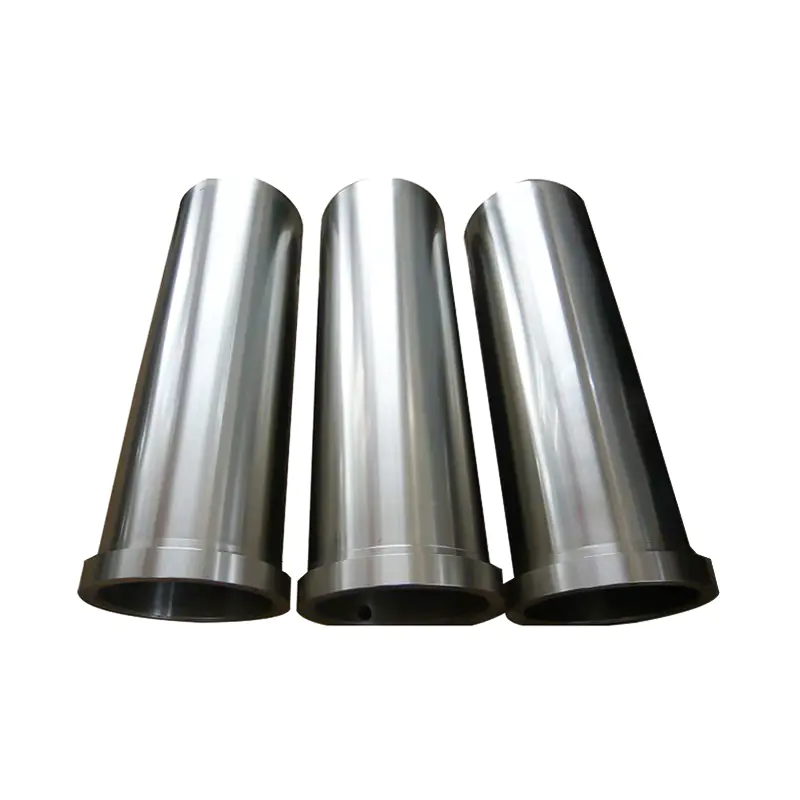 Custom Centrifugal Casting GX280 (KMTBCr26) wear-resistant inner cylinder SuppliWuxi Dongmingguan Special Metal Manufacturing Co., Ltd. is China Centrifugal Casting GX280 (KMTBCr26) wear-resistant inner cylinder Suppl...View Product →
440C: Martensitic Stainless Steel
440C is a high-carbon martensitic stainless steel. After hardening and tempering, it reaches approximately 58 to 60 HRC. The chromium content gives it noticeably better corrosion resistance than plain carbon steel or low-alloy wear plate, so it suits services where abrasive particles arrive with moisture or a mild corrosive agent. The trade-off is temperature: extended service above roughly 400°C over-tempers the material and reduces hardness. Our 440C high-hardness grinding inner cylinders use this grade for humid, abrasive environments.
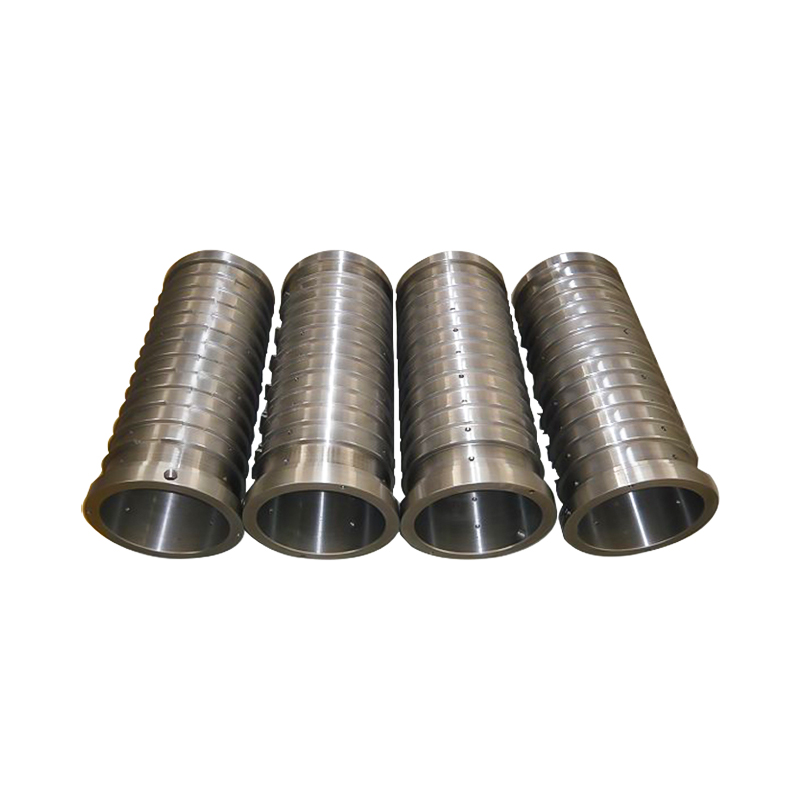 Custom Centrifugal Casting 440C high hardness grinding inner cylinder Suppliers,Wuxi Dongmingguan Special Metal Manufacturing Co., Ltd. is China Centrifugal Casting 440C high hardness grinding inner cylinder Suppliers...View Product →
2205 and 316L: Corrosion-Leaning Stainless Grades
Duplex 2205 (CD3MN) and austenitic 316L (CF3M) are not selected for their hardness. They are chosen when the conveyed medium is corrosive and the mechanical duty is moderate. Their hardness is much lower than the high-alloy wear grades, but their pitting resistance and general corrosion performance are far better. In a wear-resistant pipe system, these materials often act as the structural or anti-corrosion layer in a lined or bimetal design.
Typical material comparison for wear-resistant steel pipe selection; values represent industry-typical ranges and should be verified against the actual service condition.
| Grade |
Material Class |
Typical Hardness |
Corrosion Resistance |
Best Suited For |
| GX280 (KMTBCr26) |
High-chromium white cast iron |
Approx. 58 to 62 HRC |
Moderate |
Abrasive erosion and sliding wear in mining, ash, and grinding circuits |
| 440C |
Martensitic stainless steel |
Approx. 58 to 60 HRC after hardening |
Good |
Abrasive wear with moisture or mild corrosive agents |
| 2205 (CD3MN) |
Duplex stainless steel |
Approx. 30 HRC |
Excellent |
Corrosive media with moderate abrasion |
| 316L (CF3M) |
Austenitic stainless steel |
Approx. 90 HRB |
Excellent |
Corrosion-dominated duty with low abrasion |
The trade-off works in four directions: hardness, toughness, corrosion resistance, and cost. Confirm which property is actually limiting the life of the pipe before defaulting to the hardest grade on the datasheet.
Why Centrifugal Casting Matters for Wear-Resistant Steel Pipe
The grade defines what the material can do, but the manufacturing process determines whether the pipe actually delivers it. Centrifugal casting provides structural advantages that static castings and welded fabrications rarely match.
During centrifugal casting, molten metal is poured into a rotating mold and forced against the mold wall. The centrifugal field pushes lighter inclusions and dissolved gases toward the inner surface, where machining removes them. The result is a dense, fine-grained structure with far less shrinkage porosity than a static casting. Because the structure is consistent through the wall, hardness is distributed evenly along the length and through the thickness. Uniformity matters: scattered soft spots wear unevenly and fail early at the weakest zone.
The process also offers a practical range of sizes. High-alloy centrifugal castings can be produced from 50 mm to 1000 mm in diameter and up to 4000 mm in length, which covers most industrial conveying, feed, and discharge lines. Compared with welded pipe, a centrifugally cast pipe has no longitudinal seam and no heat-affected zone, so there is no microstructural weak line to crack or erode preferentially. Our centrifugally cast wear-resistant steel pipes follow this process route for exactly those reasons.
Keep one limitation in mind. Centrifugal casting is ideal for round components, but it does not change the material's temperature ceiling. If the duty is driven primarily by heat rather than abrasion, a dedicated heat-resistant steel pipe may be the safer specification.
How to Define Your Wear-Resistant Steel Pipe Specification
A useful specification converts operating conditions into material, hardness, and geometry parameters. Use these five steps and document every number.
- Define the wear type and abrasive characteristics. Record particle hardness, size, shape, velocity, and impact angle. If the feed contains quartz or alumina and the impact angle is steep, abrasive erosion will dominate and a carbide-rich grade such as KMTBCr26 is appropriate.
- Determine the operating temperature range. Above roughly 400°C, many high-chromium irons lose hardness as carbides coarsen and the matrix softens. Confirm that the selected grade has documented hot hardness for the actual wall temperature.
- Assess the corrosive media. If acids, alkalis, or high-chloride fluids are present, a straight wear grade will fail by corrosion even if its hardness is high. Introduce martensitic, duplex, or austenitic stainless material, or use a lined composite design.
- Confirm dimensions and end connections. Specify outer diameter, wall thickness, length, and flange or bevel preparation. Centrifugal casting tolerances differ from rolled pipe, so the drawing should reflect the cast process.
- Compare lifecycle cost. A premium wear grade costs more upfront, but its longer service life often reduces total cost once replacement labor and downtime are included. Calculate the cost per ton of material handled, not the price per meter of pipe.
Mining is a good example of the full sequence. A coarse ore transfer line combines sliding wear, impact, and occasional moisture. That combination points to a thick-wall high-chromium iron design, the same reasoning behind our high-efficiency mining machinery casings. The key is to convert operating data into quantifiable parameters instead of reusing an old specification that worked in another plant.
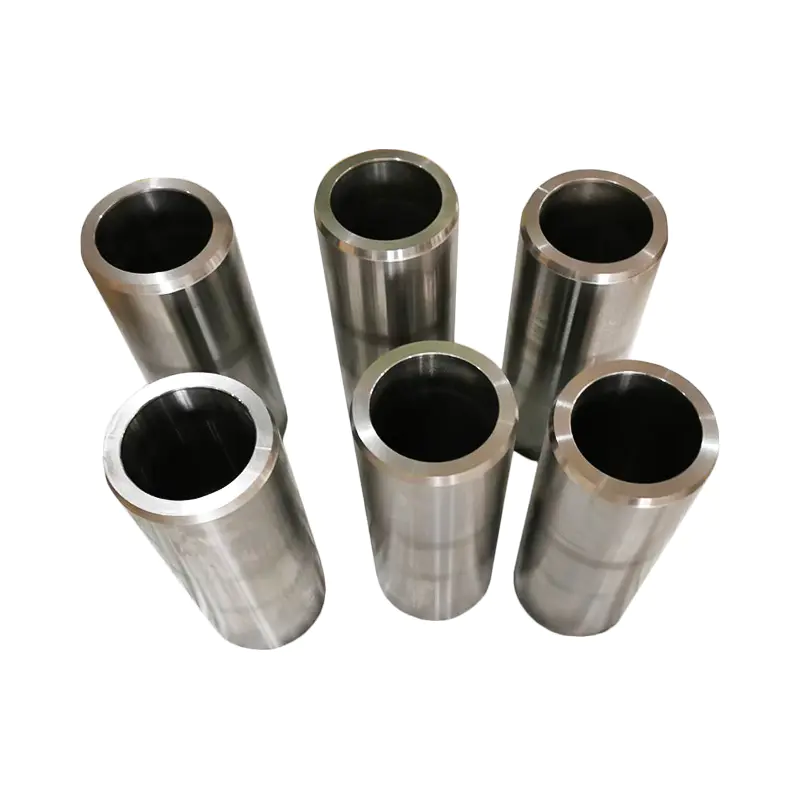 Custom Centrifugal Casting GX280 (KMTBCr26) High-efficiency mining machinery casWuxi Dongmingguan Special Metal Manufacturing Co., Ltd. is China Centrifugal Casting GX280 (KMTBCr26) High-efficiency mining machinery ca...View Product →
Quality Control and Supplier Evaluation for Wear-Resistant Steel Pipe
A wear-resistant pipe can look correct and still fail early if the chemical composition or the microstructure is wrong. The casting process and heat treatment decide the final properties; supplier evaluation should focus on the controls behind them.
Check four areas during an audit:
- Composition control. A reliable supplier verifies the melt with a direct-reading spectrometer and checks incoming material with handheld analyzers. Composition drift directly shifts hardness and carbide volume.
- Microstructure verification. Metallographic analysis confirms that the carbides are present in the right type, size, and distribution. This is the microscopic guarantee of wear resistance, and it cannot be inspected by eye.
- Dimensional inspection. A 3D scanner or equivalent system verifies roundness, inner bore tolerance, and wall thickness consistency. Centrifugal castings should be checked after machining, not only after casting.
- Process traceability. Ask for heat numbers, process routes, heat treatment records, and the inspection report for each batch. Traceability is what separates repeatable production from one-off luck.
Our facility's quality control equipment includes direct-reading spectrometers, handheld spectrometers, metallographic analyzers, and a 3D scanner, and our annual casting capacity is 5000 tons. For a serious evaluation, request representative inspection reports and, if practical, witness sampling on the proposed production batch.
Conclusion: Building a Reliable Wear-Resistant Pipe Solution
A reliable wear-resistant pipe solution follows a repeatable sequence: identify the dominant failure mode, match the material grade, confirm the manufacturing process, quantify the specification, and audit the supplier. Skipping any step tends to shift the problem to the next component in the line.
Working with a manufacturer that controls the full route, from casting through heat treatment to final inspection, also reduces coordination risk. You receive one process record, one quality standard, and one point of accountability.
When you approach a supplier, lead with the operating data, not just the pipe size. Provide the abrasive type, particle size and velocity, temperature, corrosive media, and the required dimensions. With those details, a competent foundry can propose the right grade, the right casting route, and a realistic delivery plan for your specific service.




 English
 Español
 عربى
عربى